Masai Mara National Reserve Kenya: Safari, Great Migration & Travel Guide
The Masai Mara National Reserve is a 1,510 square-kilometre wildlife reserve in Narok County, southwestern Kenya. It forms the northern part of the wider Serengeti-Mara ecosystem, which continues south into Tanzania’s Serengeti National Park. The reserve is known for its large populations of lions, leopards, cheetahs, elephants, buffaloes and other plains wildlife. Also, the annual movement of wildebeest and zebra into Kenya during the Great Migration in Masai Mara.
The Maasai Mara is not one uniform safari area. The main reserve includes the Central Mara and Mara Triangle, while the surrounding Masai Mara conservancies provide a different type of safari experience. Where you stay affects the wildlife areas you can reach, the entrance gate you use, the activities available, and the amount of time spent driving.
At Serengeti Masai Mara Experts, we plan Masai Mara safaris around the travel season, accommodation location, migration movement, safari duration and the type of experience a traveller wants. This guide explains the reserve’s wildlife, regions, gates, Great Migration, best time to visit, accommodation, access, Masai Mara park fees, and practical safari planning.
Masai Mara National Reserve at a Glance
| Information | Details |
|---|---|
| Country | Kenya |
| County | Narok County |
| Location | Southwestern Kenya |
| Reserve size | About 1,510 km² |
| Ecosystem | Serengeti-Mara ecosystem |
| Main attraction in Maasai Mara | Wildlife and Great Migration |
| Main wildlife | Lion, leopard, cheetah, elephant, buffalo, rhino, wildebeest, zebra and more |
| Main rivers | Mara River and Talek River |
| Main Masai Mara safari areas | Central Mara and Mara Triangle |
| Best-known entrance | Sekenani |
| Other gates | Talek, Musiara, Oloolaimutia, Oloololo, Sand River and Enoompuai |
| Main access | Road from Nairobi or scheduled / charter flight |
| Nearby safari areas | Mara conservancies and Serengeti National Park |
History of Masai Mara National Reserve
The Masai Mara National Reserve Kenya was founded in 1961 as a wildlife refuge, with an original area of 520 square kilometers. The boundries of Maasai Mara Kenya were eventually enlarged, and it became a game reserve. Following Kenya’s independence in 19633, the Narok County Council took over its operation.
The Masai Mara is named after the Maasai people, the area’s original inhabitants. The Maasai word “Mara” means “spotted” and refers to the landscape studded with trees and plants. Historically, the Maasai People experienced obstacles such as displacement caused by colonial land claims and illness outbreaks such as smallpox and rinderpest3.
Today, the Masai Mara National Reserve is known for hosting the wildebeest migration Kenya. This Kenya safari great migration is one in which millions of wildebeest, zebras, and other animals cross the Mara River each year. This great migration Kenya spectacle has earned Masai Mara National reserve recognition as one of the Seven Natural Wonders of Africa
Masai Mara National Park Location and Map
Location of Maasai Mara Kenya
Masai Mara National Reserve covers roughly 1,510 square kilometers (580 square miles). Also, Maasai Mara Kenya is marked by gentle grasslands, open pastures, and the unusual acacia tree. Maasai Mara, Kenya, is situated in the Great Rift Valley in the southern region of the country. Also, with a life-giving river with enriched soils supporting the coexistence of both wildlife and human settlements.
Masai Mara National Reserve shares a border with Tanzania’s Serengeti National Park, forming part of the larger Serengeti Mara ecosystem. The Siria Escarpment marks the reserve’s western boundary, and the Mara River flows through it. Hence, playing an important role in maintaining the Masai Mara National Reserve’s unique biodiversity.
Masai Mara National Park Map
Below are the Masai Mara Maps for this destination. These serve as directions for those who want to have Masai Mara safari holidays.
Masai Mara National Reserve vs Mara Triangle vs Conservancies
| Area | What It Is | Main Difference |
|---|---|---|
| Masai Mara National Reserve | Public wildlife reserve | Main traditional game-drive destination |
| Mara Triangle | Western section of the reserve | Different management/access arrangements and strong migration habitat in Masai Mara |
| Private conservancies | Community / private conservation areas outside the Maasai Mara | Usually lower vehicle density and additional activities depending on the conservancy |
Great Wildebeest Migration in Masai Mara
A Mara River crossing cannot be guaranteed on a particular day. Wildebeest herds in the Masai Mara National Reserve may remain near the river for hours or days before moving, and some seasons produce fewer crossings than others.
| Period | What to Expect |
|---|---|
| January-February | Resident wildlife and good predator viewing |
| March-May | Green season, fewer visitors in some areas |
| June | Drying conditions and increasing migration activity |
| July | Herds begin arriving in northern Serengeti / Mara areas |
| August-September | Strongest period for possible Mara River crossings |
| October | Herds begin moving back toward the Serengeti |
| November-December | Short rains and continued southward movement |
Wildlife in Maasai Mara National Reserve

The Maasai Mara Kenya is one of the large eco-systems in Africa holding the big five (lions, leopards, rhinos, buffalos and elephants) in large populations.
These are not the only animals that you can find in the reserve as you can also get sightings of packs of spotted hyenas, groups of zebras, impalas and many more.
Year in, year out Masai Mara National Reserve plays a role in the great movement of the large herds of the wildebeests. In addition, it provides a suitable temporary habitat to them.
The wildebeests move along with the other animals such as the zebras, gazelles and antelopes for mutual support and protection from the predators.
The predator-prey interactions are also part of the reasons why Masai Mara National Park is one of the most visited areas in Kenya. The big cats such as the lions and leopards exhibit their power in the grasslands by hunting down whatever victim they want. And also, by being undefeated in most of the battles with other animals in Masai Mara.
The crocodiles in the Maasai Mara Kenya waters are the kings of the hunt in the marine kingdom. Also, they take advantage of the river crossing during the East Africa great migration in Masai Mara to get hold of their prey.
Climate and best time to visit Masai Mara National Reserve Kenya
Maasai Mara has tropical climate and has two seasons, that is the rainy and dry.
- Dry Season (June to October): This is the best time to visit Masai Mara National Reserve in Kenya. In addition, this is because the weather is sunny and dry with average daytime temperatures of 25°C (77°F). Additionally, the wildlife is also easier to spot since the vegetation is not so thick, and animals are present near water points. This period also coincides with the great migration africa dates of July-September. Therefore the Africa great migration dates from July to September are the best time to see the great migration in Africa. Hence providing for dramatic river crossings and predator-prey activity.
- Rainy Season (November to May): The long rains last from March to May, and the short rains fall in November and December. Also, this is the worst time to visit Masai Mara Kenya. The scenery is lush green and perfect for photography and birdwatching during these months. Some of the roads, however, become muddy and difficult to traverse during your Maasai Mara trip.
Top Attractions in the Maasai Mara Kenya
1. The Mara Triangle
The Mara Triangle , situated in the western part of Maasai Mara Kenya is a region that accumulates 510km quares of the reserve in proximity to the Oloololo escarpment. And also has a variable concentration of wild animals including the big five safari Animals in Kenya (lions, leopards, elephants, buffaloes and rhinos). Besides the Oloololo escarpment, the Mara Triangle is one of the serene regions in Masai Mara, Africa, for the witnessing of the great wildebest migration. The Mara Triangle has less tourist vehicle congestion and less noise pollution because the Mara river flows through the reserve. This is also a base for both private and group Masai Mara camping safari activities in the reserve. However camping in the Mara Triangle requires payment of camping fees. Below is a summary of these Masai Mara safari costs in the Mara Triangle.
Camping Fees in Mara Triangle
| Category | Adult | Children (9-17 yrs) | Student |
|---|---|---|---|
| Nonresident | US$40 | US$20 | US$20 |
| EA Resident | Kshs 2000 | Kshs 1000 | Kshs 1000 |
| Kenyan Citizen | Kshs 1000 | Kshs 200 | Kshs 200 |
2. The Mara River
Mara river flows in the Masai Mara National Reserve Kenya and stretches as far as the Serengeti National Park in Tanzania around the Mara region. Mara river gives life to the nature in the Maasai Mara Reserve because of it’s a haven for animals like crocodiles and hippos. It also provides drinking water to the rest of the wild species in the Masai Mara National Park. The great herds of the wildebeests also use the Mara river as the migration route. Additionaly, these are always seen crossing from Masai Mara Kenya to Serengeti National Park and from Serengeti np to the Maasai mara national reserve. How can we talk about the mara river in the Maasai Mara and forget to talk about the stunning scenic beauty around. This includes the vibrant river line forests that form a captivating scenic greenery around the Mara river. Also the rolling hills that create intense and heartwarming panoramas with the sunset and the sunrise in the Masai mara.
3.The great wildebeest migration in Masai Mara
This animal migration in Africa is one of the unique phenomenal that occurs in the reserve. Large herd of wildebeests, zebras, gazelles and impalas make their way through the Mara river to the riverine banks in the Maasai mara National reserve Kenya. This animal migration Kenya occurs in the Maasai mara between great migration Africa months of July to early October. However, the best time to visit africa for migration in Masai Mara Kenya is from late July to August.
Additionally, its because this is the dry season in the Masai Mara National Park and because of the best accessible wildebeest migration routes. During this Africa migration safari period, will also witness the thrilling predator- prey behaviors. In addition, you will see the large herds go through the valley of death with hunters such as the crocodiles and lions on a wait.
4. The big five safari in Masai Mara Kenya
Elephant herds are very common in Maasai Mara National Reserve and they are one of the large mammals in the reserve. Elephants are usually seen in their social groups or individually grazing. Lions are part of the carnivore group normally seen chasing after their prey such as impalas and gazelles and often they are also seen feeding in prides in reserve. The black rhinos in Maasai mara Kenya are usually seen moving with their young ones because of the strength of the bond the mothers share with their young ones.
As you move through the Masai Mara park, you will be lucky to sight the Panthera pardus leopard in the rocky areas of the reserve. Also in the wooden branches of the acacia trees overlooking the Masai Mara National Park plains for prey. Lastly, there are the African buffaloes of the Masai Mara with a population of about 30,000. These buffaloes usually move in large herds, and they always draw near the Mara riverine banks.
5. The Maasai villages in Kenya
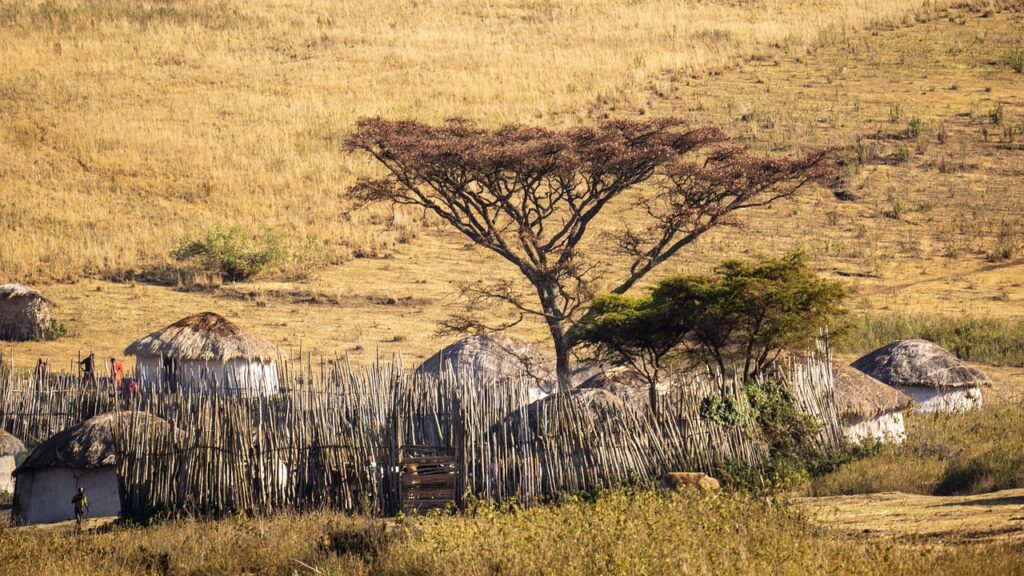
The open grasslands of Maasai Mara National Reserve are co habited by both humans and wild species. The indigenous community in the Maasai Mara are known as the Maasai People and have a unique day to day life experiences. These include herding, hunting and art design skills and this attracts people from different countries that have different cultures.
6. Musiara Swamp
Musiara swamp is one of the habitats in Maasai Mara with dense populations of the hippos. At the mushy grounds. It’s also a shelter for herds of elephants and prides of lions.
Masai Mara Safari Holidays Experiences in Kenya
- Great wildebeest migration in Masai Mara.
- Birding safaris in Kenya.
- Visit of the Maasai villages in the reserve.
- Big five safari Kenya animals encounters.
- Scenic/sunrise and sunset game drive experiences.
- Bush meals and nature walking adventures.
- Picturesque experiences.
Here are some costs that are usually covered in the Masai mara safari packages.
- Camping fees; US$20-US$30.
- Vehicle entrance fees; Kshs 400-Ksh 5000.
- Game ranger fees; Kshs 1,500-Ksh 4000.
How to Get to Masai Mara National Reserve
If someone is coming from Jomo Kenyatta Airport and wants to use road transport. It will take you about 4-5 hours to get to Masai Mara National Reserve, that is if they are using the route through Narok. Additionally, it’s a distance by road of about 247.2 km most and our 4×4 safari vehicles in Kenya are to be used.
You can also opt to use a charter flight from the Kenyatta airport to any of the Masai Mara airstrips of your choice in Kenya. Some of the airstrips in Maasai mara include the Olseki Naibosho. Airstrip, Musiara airstrip, HK48, Mara airstrip and Serena airstrip. The flight takes approximately an hour to reach any of the airstrips in the Maasai Mara National Park.
And lastly, if you want Masai Mara tours from Nairobi the capital of Kenya. It will take you about 5 to 6 hours to get to Maasai Mara National Reserve by road, according to the route one would have taken.
Airstrips in Masai Mara National Park Kenya
1. Kichwa Tembo airstrip
Kichwa Tembo airstrip is privately owned and is located in the northern region of Maasai Mara Kenya. A syou arrive at this Kenya airstrip, you get to sight numerous animals like lions roaming at the distance in Masai Mara safari park. The prices of the tickets of Kichwa Tembo airstrip usually range from €127 to €254 according to the travelers destination.
2. Mara Serena airstrip
Mara Serena airstrip is under Kenya’s civilian ownership and it’s situated along the Mara triangle with heavenly birds eye view. Flight tickets at this Mara Serena airstrip range from€ 1000 upwards depends on the next landing destination.
3. Musiara airstrip
Musiara airstrip is situated in the northern region of the Masai mara national reserve near the governor’s camp and Serian camp. The price tickets of Musiara airstrip usually start from 200$.
4. Keekorok airstrip
Keekorok airstrip is located in the southern region near various lodges such as sekanani lodge and keekorok lodge. The lowest price ticket from Keekorok airstrip is US$109.
5. Ol Kiombo airstrip
Ol Kiombo airstrip is in proximity with the Talek River and safari camps like fig tree camp, mara Interpids camps and Telek bush camp. Domestic flights of Ol Kiombo airstripusually go from €650 and above.
Where To Stay In Maasai Mara National Reserve
Maasai Mara offers various kinds of accommodations with different price settings there everyone’s sorted. From the budget friendly safari camps/hotels to the luxury Masai Mara lodges ones that offer unique VIP experiences in the Maasai Mara reserve. The examples of the Masai Mara budget and luxury accommodations and their costs per night include;
Masai Mara Accommodation Rates
| Category | Hotel/Camp | Rate (USD) |
|---|---|---|
| Budget | Mara Sunset Camp | US$65 |
| Budget | Sunset Maasai Camp | US$64 |
| Budget | Rover’s Campsite | US$77 |
| Luxury | Mara Major Camp | US$190 |
| Luxury | Olorien Mara Camp | US$240 |
| Luxury | Mara Leisure Camp | US$144 |
| Luxury | Mara Interpids Tented Camp | US$650 |
| Luxury | Lorian Safari Camp Limited | US$527 |
| Luxury | Mara Sweet Acacia Lodge | US$468 |
Masai Mara National Park Entrance Fees (2027 Rates)
Masai Mara National Reserve entrance fees are part of your Masai Mara safari cost. However, these prices of the safari holidays keep changing according to the season and the reserve’s Management.
Note
- Students are to have an ID card from their school to be presented at the Maasai Mara entrance.
- Non-residents of Kenya should also have an ID or passport from their country of residence for Identity.
- Kenyan and East African residents should also be able to show their ID.
Below are the updated Masai Mara National Reserve entrance fees per day for 2027.
Masai Mara Entry Fees
| Category | Fee |
|---|---|
| Nonresident (Adult) – Pre & Post Busy Season | US$100 |
| Nonresident (Adult) – Busy Season | US$200 |
| Children Above 8 Years | US$50 |
| Children Below 8 Years | Free Entrance |
| Nonresident (Student) | US$40 |
| East African Resident (Adult) | Kshs 1,200 |
| Kenyan Resident (Adult) | Kshs 1,000 |
| Kenyan Resident (Child) | Kshs 300 |

Entrance Gates to the Masai Mara National Reserve Kenya
1. Sekanani Gate
Sekanani gate is situated in the eastern part of the Masai Mara National reserve Kenya. Additionally, it is near the Sekanani town and this is like one of the main entry points in the Maasai Mara National Park. The easily accessible route to Sekanani gate is through the town of Narok from Nairobi. This is because the road is in a good condition since it is well paved and less rough. Some of the Masai Mara lodges/camps near this gate include the Mara Sopa lodge, Keekorokk lodge, Kambu Mara camp and many others.
The park entry costs in Sekanani are vary and are determined by either the peak season or the low season. Sekenani is the best-known road entrance from Nairobi, but it is not automatically the best gate for every safari. The correct gate depends primarily on where the accommodation is located.
2. Musiara gate
This is one of the gates at the Maasai Mara National Reserve renowned for being a strategic wildlife spotting site for tourists. So, its because of the prides of lions that are found in proximity to the Musiara gate. Other wildlife like herds of elephants, buffaloes, hippos and many more are also spotted near this gate. So, that is in the North-Eastern direction of the Masai Mara National reserve. Some of the lodges and camps near Musiara gate are the Governor’s camp, Mara Bush camp, Musiara campo and Mara Serena wildlife lodge.
Some of these accommodation options are budget friendly and others are luxurious accomodations. You can get to this gate by road you go through Narok town and then use the route through Sekanani.
3. Talek gate
Talek gate is at the Eastern boundary of the Maasai Mara national park and its is in proximity to the Talek River. The latter is one of the best scenic captivating attractions of the Masai Mara National Reserve Kenya. Also, the most accessible route to Talek gate s through B3 and it takes about 1;45 minutes to 2 hours for someone coming from Nairobi to reach this gate. Some of the accommodations that are situated near Takek gate of Masai Mara gate include;
- Mara Simba Lodge.
- Talek Bush camp.
- Rekero camp.
- Greenwood safari camp.
4. Oloolaimutia gate
Oloolaimutia gate is another gate that is like one of the pathways of the wildebeests in the Maasai Mara national reserve. So it’s also a dominant spot for other wildlife sightings such as the leopards, antelopes, buffaloes and many more.
Some of the examples of the camps and lodges near the gate are Ol Moran Tented camp, Enchoro Wildlife camp, Mara Sopa lodge and many more.
Popular safaris in the Maasai Mara from Serengeti Masai Mara
Serengeti Masai Mara company presents you with the most popular safaris for Masai Mara National Reserve. You can customise your trip with us and combine it if you want with any safari destination in East Africa.


Faqs
1. Which Month Is Best for Masai Mara Safari?
July to October is the best time, when the Great Wildebeest Migration is on and 1.5 million animals cross the Mara River. Hence, 90% chance of dramatic sightings of predators. August-September is peak for river crossings; weather is dry, sunny (25-30°C) and dusty, perfect for photography.
Wildlife density is highest, with 95% Big Five success. March-May (wet season) is cheapest (30-40% off) but rain can disrupt game drives. Fortunately, birding safaris in the Masai Mara excel with 570+ species active.
2. Is Masai Mara Better Than Serengeti?
Neither is better; it’s a matter of preference. Masai Mara (1,510 km²) is smaller, more accessible (6hr drive/1hr flight from Nairobi) and busier than Serengeti (14,750 km²) with higher tourist density (150-200 vehicles/day vs Serengeti’s 50-100).
Masai Mara’s strengths: intense Africa wildebeest migration action (July-Oct). Also, 95% Kenya Big Five animal sightings and vibrant Maasai culture (village visits $20-$50). Serengeti NP offers vastness, fewer crowds, and diverse ecosystems (woodlands, plains) with better leopard/rhino sightings and year-round migration views (calving Jan-Feb).
Masai Mara Kenya park fees ($100-$200/day) are lower than Serengeti’s ($60-$70 + $40 concession). Masai Mara holidays are good for shorter, budget-conscious trips. Lastly, the Serengeti is better for remote, multi-park itineraries (e.g., with Ngorongoro). Reviews give Mara 4.8/5 for accessibility, Serengeti 4.85/5 for variety.
3. Can I Wear Shorts in Masai Mara?
You can wear shorts in the Masai Mara Kenya, especially during the warm days (25–30°C) from June to October. So, it’s dry and comfy for game drives in this park. Lightweight, breathable shorts in neutral colors like khaki or olive are perfect to blend into the Masai Mara bush and avoid attracting insects. At night, temperatures drop to 10–15°C, so swap for long pants to stay warm and protect against mosquitoes, especially since malaria is a risk (pack repellent!).
For cultural respect during Maasai village visits, longer shorts or pants are better, as locals dress modestly. Pack a mix of shorts and trousers for versatility that is daytime heat and evening chills demand it!
4. What Language Do They Speak in Masai Mara?
In the Masai Mara, the Maasai people speak Maa, their native language, used in villages and cultural interactions. English and Swahili, Kenya’s official languages, are widely spoken by guides, lodge staff, and rangers. Hence, ensuring smooth communication for tourists during their Masai Mara holidays.
English dominates safari operations in this Kenya National Park, from game drive briefings to signage. Although Swahili is common in casual exchanges. Our Serengeti Masai Mara guides are multilingual, blending Maa for cultural authenticity (e.g., village tours) with fluent English/Swahili for visitors. Road signs and park rules use English, making navigation easy for international travelers.
For the best affordable luxury safari deals for Masai Mara National Reserve, make reservations through Serengeti Masai Mara Specialists.