Worst/Best Time to See the Great Migration in Africa: 2027 Dates
The Great Migration in Africa is a year-round movement of about 1.5 million wildebeest, 300,000 zebras, and hundreds of thousands of gazelles across the Serengeti-Mara ecosystem of Tanzania and Kenya. There are no fixed African Great Migration dates because the herds respond to rainfall, fresh grass and water conditions. Instead of asking for one exact “migration month,” our travelers choose the period that matches the wildebeest migration experience they want to see in Serengeti or Masai Mara. Whether that is calving in the southern Serengeti National Park, the northward movement, Grumeti River crossings, or the famous Mara River crossings.
For most travellers interested in the dramatic river-crossing phase, July to October is the main migration window to consider, as verified by the Serengeti Masai Mara Experts. The northern Serengeti and Kenya’s Masai Mara National Reserve are important areas during this period, with August and September commonly associated with strong Mara River crossing activity. However, crossings are never guaranteed on a particular day, and the herds can be spread across both sides of the border.
The great African migration safari is equally interesting earlier in the year. From January to March, large herds congregate in the southern Serengeti and Ndutu region for the calving season. It is the time to see newborn wildebeest and intense predator activity. From April to June, the herds generally move north through the central and western Serengeti, with the Grumeti region becoming an important part of the journey.
This guide explains the Great Migration dates in Africa and seasonal patterns month by month, including where the herds are usually found, what is happening during each phase, which months are best for river crossings or calving, and the difference between Serengeti and Masai Mara. Lastly, the weather conditions, crowd levels, and how to plan a Masai Mara or Serengeti migration safari in Africa around the experience you want.
The Africa Great Migration Timing at a Glance
Best Time to See the Great Migration in Africa: Month-by-Month Guide
There are no fixed Great Migration dates in Africa. The wildebeest migration moves throughout the year across the Serengeti-Mara ecosystem, and the best time to visit depends on which phase you want to see. Below is a month-by-month guide for the big migration in Africa for Serengeti and Masai Mara.
July to September: Peak River Crossings (Serengeti & Masai Mara)
The best time to see migration in Africa of Serengeti and Masai Mara is usually between July to the late weeks of September.
During these Great Migration dates in Africa, it is easier to track down the migration pathways of the wildebeest and the movement of other animals. Also, during this high season, tourists are able to view the game and experience wildebeest in full force. Wildebeests can be observed at the Mara River in both the Serengeti and Masai Mara. Viewing the vast numbers of wildebeest moving across the Serengeti and Maasai Mara stirs up emotions of excitement. At the same, the great animal migration in Africa bridges the gap between the human being watching and nature. Therefore, they get more connected to the wildlife during this great migration Africa time of year in Serengeti or Masai Mara.

During this East Africa great migration of wildebeests, other animals usually move with them like the zebras, impalas, gazelles and antelopes. Therefore during these great migration Africa months from July to September, tourists can witness a variety of other wild animals since the wildebeests usually settle at the parts of Serengeti and Maasai Mara.
Predators such as lions, leopards, and cheetahs actively hunt weaker animals like the gazelles, Impalas, creating intense scenes of survival. So, the predators use this once in a while opportunity during the best time to see the great migration in Africa and feast on them.
Kenya and Tanzania safari adventures like sun set and sunrise viewing, are also best during the dry season in the Africa great migration dates between June to September. This is because of the bright skies the sun makes a dramatic scenery. Also, tints itself on the Savannah grasslands of the Serengeti Mara creating a captivating elegance for the watchers.
What Is the Best Month to See the Great Migration in Africa?
Worst time to visit Africa for migration
Early March to April is the period of the rainy days in both Serengeti to Maasai Mara. So, the worst time to witness the wildebeest migration in Serengeti or Masai Mara is during those rainy months from March to April. Also, it is said to be the risky and less enjoyable period to witness the great migration Kenya Tanzania.
Most of the Kenya and Tanzania safari experiences in the Maasai Mara National Reserve and the Serengeti np are filled with game drive adventures. So, on a rainy day, at least 3 of the 7 safari vehicles in any of these parks usually get stuck in the waterlogged parts of the parks. So by the time the vehicle is worked upon , tourists might find other safari vehicles in better positions to observe the wildebeest crossings. Hence, your vehicle could be obstructed by others which makes the great animal migration in Africa experience uneventful and unenjoyable.
Animals in Serengeti Mara including wildebeests become less vibrant on rainy days during this worst time to visit Africa for migration. So, the tourists can also hardly witness the actions like predator-prey relations on such days. A few animals normally show up during the rainy period thus visitors would not enjoy game viewing in such a period.

Great Migration Experiences in Africa and When to See Them
The animal migration in Africa is a year-round movement through the Serengeti Mara ecosystem. The timing below shows the usual seasonal pattern, but rainfall and grazing conditions can shift the herds by several weeks.
- Wildebeest calving
- Season: January-March
- Location: Southern Serengeti and Ndutu plains
- Experience: Newborn wildebeest, nursery herds and predator activity involving lions, cheetahs and hyenas.
- Best period: February is usually the peak calving month.
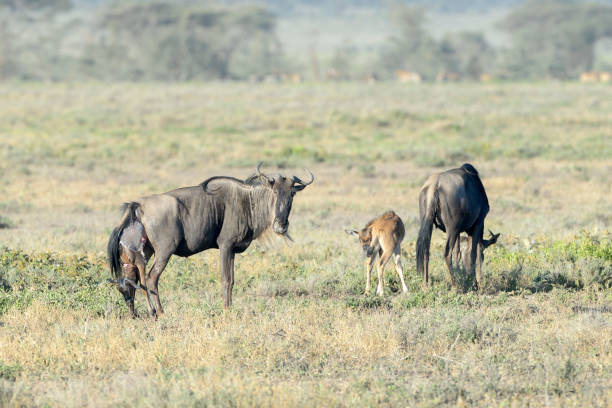
Blue Wildebeest (Connochaetes taurinus) mother giving birth to new born baby on savanna, Ngorongoro conservation area, Tanzania.
- Predator action around newborn calves
- Season: February-March
- Location: Southern Serengeti and Ndutu Region
- Experience: Lions, cheetahs, hyenas and jackals hunting around large concentrations of vulnerable calves.
- Best period: February and early March.
- Northward movement of the herds
- Season: April-May
- Location: Central Serengeti and Western Corridor
- Experience: Long lines of wildebeest move across the plains as the southern grasslands dry out.
- Best for: Travellers who want to see the migration in motion without focusing specifically on river crossings.
- Wildebeest rutting and mating season
- Season: May-June
- Location: Central and western Serengeti
- Experience: Male wildebeest competing for females, chasing, fighting and defending temporary territories.
- Grumeti River movement and crossings
- Season: May-July, usually around June
- Location: Western Corridor and Grumeti region of Serengeti
- Experience: Herds gathering near the Grumeti River, with possible crossings and crocodile encounters.
- Note: Grumeti crossings are less predictable and generally smaller in scale than Mara River crossings.

ultra wide angle shot of wildebeest herd crossing the mara river at masai mara national reserve in kenya
- Movement into Northern Serengeti
- Season: June-July
- Location: Central Serengeti, Western Corridor and Northern Serengeti
- Experience: Large herds moving towards the northern grazing areas and the Mara River.
- Mara River crossings
- Season: July-October
- Location: Northern Serengeti, Kogatende, Lamai and Kenya’s Masai Mara
- Experience: Wildebeest gather on riverbanks, hesitate before entering the water, and cross strong currents and crocodile habitats.
- Most requested period: August–September.
- Important: A crossing is never guaranteed on a particular day or at a specific crossing point.
- Dry-season wildlife viewing in Masai Mara
- Season: July-October
- Location: Masai Mara National Reserve and surrounding conservancies
- Experience: Migrating herds, resident lions, cheetahs, leopards, elephants and large concentrations of plains game.
- Best period: August-September for the highest chance of encountering migration activity in the Mara.
- Late migration and return south
- Season: October-November
- Location: Northern Serengeti, eastern Serengeti and central Serengeti
- Experience: Later Mara River crossings, scattered herds and the beginning of the return journey towards the southern plains.
- Return to the southern Serengeti
- Season: November-December
- Location: Eastern and southern Serengeti
- Experience: Herds moving back towards fresh grass in preparation for the calving season.
- Best for: Green landscapes, moving herds and the beginning of the next migration cycle.
- Full annual migration circuit
- Season: Throughout the year
- Location: Serengeti-Masai Mara ecosystem
- Experience: The complete natural cycle, from calving and predator activity in southern Serengeti to the Grumeti movement, Mara River crossings and return south.
- Best approach: Plan the safari around the specific experience you want rather than treating the migration as a single event.
Masai Mara and Serengeti National Park Entrance Fees For 2025-2026
After knowing the Africa great migration dates between July and September and also the worst time to see the great migration in Africa between March to April. Consider knowing the Masai Mara and Serengeti National Park Entrance fees. Book your Serengeti Mara trip with Serengeti Masai Mara Safari Company. Below are the entrance fees to these Kenya and Tanzania National parks.
| Park | Category | Fee |
|---|---|---|
| Serengeti National Park (Tanzania) | Foreign Adult | US$70 |
| Foreign Child | US$20 | |
| Children below 5 years | Free | |
| East African Adult Resident | TSH 10,000 | |
| East African Child Resident | TSH 2,000 | |
| Maasai Mara National Reserve (Kenya) | Foreign Adult | US$100 |
| Foreign Child | US$50 | |
| Children below 8 years | Free |