Tanzania National Parks: Complete Safari Guide to All Parks
The Tanzania national parks are home to some of East Africa’s most critical wildlife habitats, ranging from the open plains of the Serengeti to the forests around Lake Tanganyika, the mountains of Kilimanjaro and the wetlands of the southern safari circuit. There’s a Tanzania safari park to suit all tastes, the right choice depends on what wildlife you want to see, how long you have to spend, and how you plan to travel.
Serengeti National Park is the main destination for the Great Wildebeest Migration primarily between dates from July and October, and large concentrations of predators. Tarangire is known for elephants and baobab trees, while Nyerere offers river safaris and a quieter southern Tanzania experience. The Mahale Mountains and Gombe National Park suit travellers interested in chimpanzee trekking in Tanzania, and Kilimanjaro is the destination for high-altitude mountain climbing.
This guide to the 22 Tanzania national parks explains what each park is known for, where it is located, which activities are available, when to visit, and how to budget for a safari. It also compares the main Tanzania safari circuits and explains how to combine parks without spending too much of your holiday travelling between them. These national parks in Tanzania stand among the best places in Africa to visit in 2027 for game viewing and sightseeing tours.
Serengeti Masai Mara Experts helps travellers plan Tanzania safaris around wildlife interests, travel dates, accommodation preferences, and budget. The aim is to choose national parks in Tanzania that fit the trip rather than attempt to visit as many as possible. Since choosing one or combining a few of the 22 national parks is hard when planning a Tanzania safari, we completely organise guided safaris for first-timers and all travellers who prefer this stress-free mode.
Tanzania National Parks at a Glance
| Tanzania Safari Parks | Best Known For | Typical Trip Focus |
|---|---|---|
| Serengeti National Park | Great Wildebeest Migration Safaris, lions and other predators | Wildlife photography and classic safaris |
| Tarangire National Park | Elephants and baobab landscapes | Game drives and dry-season wildlife |
| Lake Manyara National Park | Forest, lake habitats and diverse birdlife | Short game drives and birdwatching |
| Arusha National Park | Mount Meru, crater scenery and varied habitats | Tanzania day trips, hiking and canoeing where permitted |
| Kilimanjaro National Park | Mount Kilimanjaro | Guided mountain climbing |
| Nyerere National Park | Rufiji River system and boat safaris | Southern Tanzania wildlife trips |
| Ruaha National Park | Large landscapes, elephants and predators | Remote game viewing experiences |
| Mahale Mountains National Park | Chimpanzee trekking in Tanzania | Forest trekking and Lake Tanganyika |
| Gombe National Park | Chimpanzees and research history | Guided forest trekking |
| Udzungwa Mountains National Park | Forest hiking, waterfalls and endemic species | Hiking and nature walks |
Note: Ngorongoro Crater is deliberately not included as a national park because it is within the Ngorongoro Conservation Area.
How Many National Parks Are in Tanzania?
Tanzania’s official national parks network (TANAPA) lists 22 national parks, covering 15% of the land in the country, with the Nyerere National Park, which is the biggest, taking up approximately 30,893 sq. km. So, it is followed by the Serengeti National Park, taking 14763 square kilometers, then the Tarangire National Park, taking 2850 square kilometers. Some of these 22 Tanzania safari parks are primarily visited for game drives, while others are more suitable for mountain climbing, hiking, chimpanzee trekking, boat safaris, or birdwatching.
When choosing which of these 22 Tanzania parks to go to for a safari, compare their main attractions, the time needed to reach them, accommodation availability, and the activities allowed inside its boundaries.
The Tanzania National Parks Map
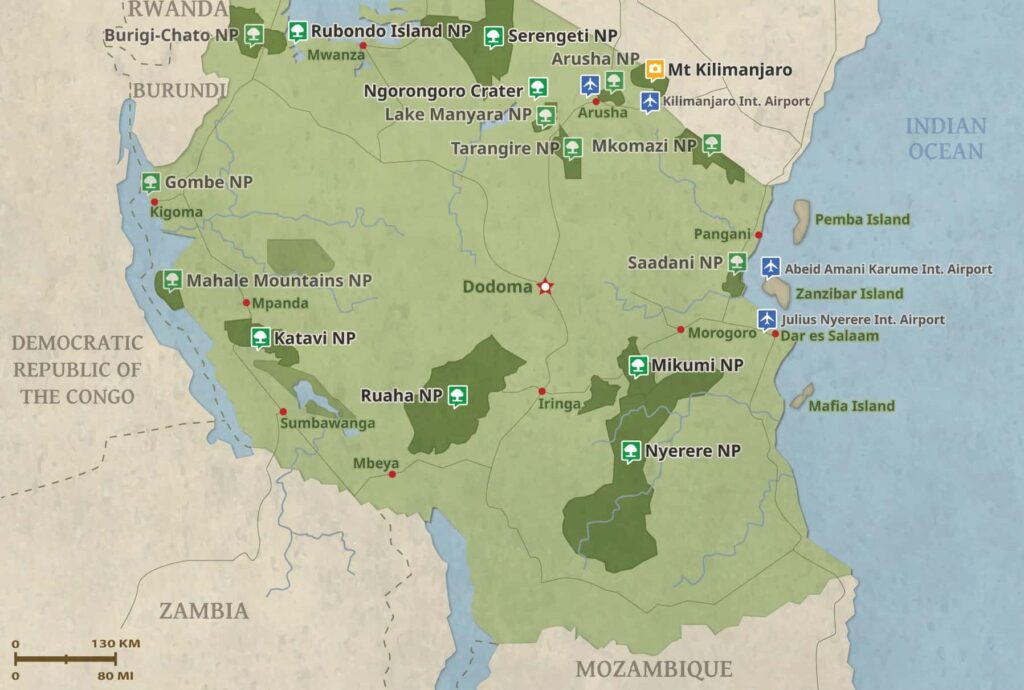
All 22 National Parks in Tanzania and What Each Offers
Northern Circuit Tanzania Safari Parks
1. Serengeti National Park
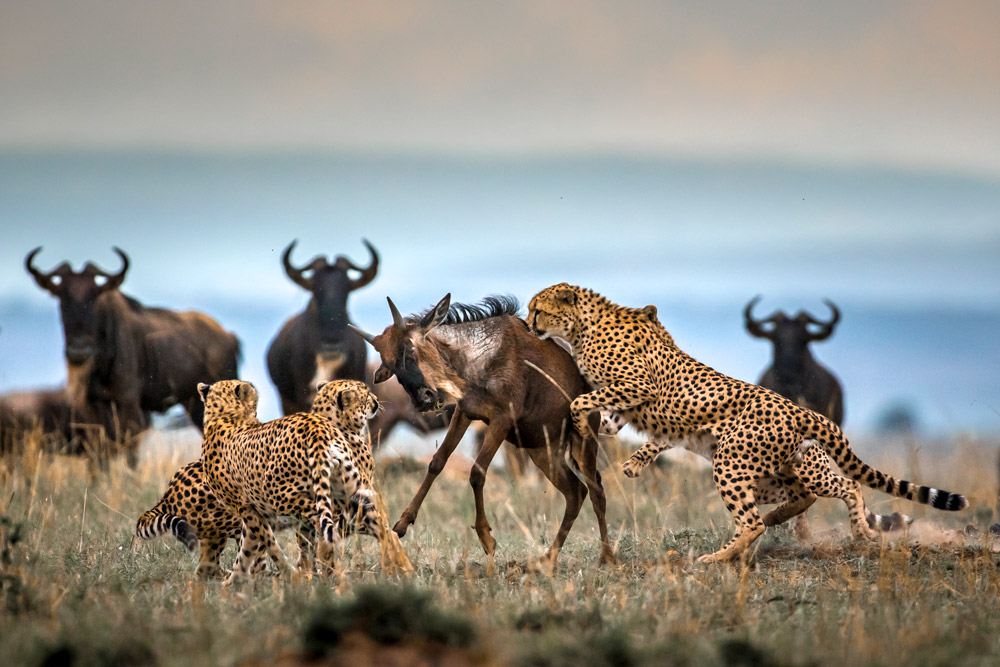
The Serengeti National Park is located in northern Tanzania and is famous for the Great Wildebeest Migration, extensive savannahs, lions, leopards, cheetahs and other wildlife. The best Serengeti safari areas to visit depend on the herds’ seasonal movements. The park is a core choice for multi-day wildlife safaris in Tanzania.
2. Mount Kilimanjaro National Park
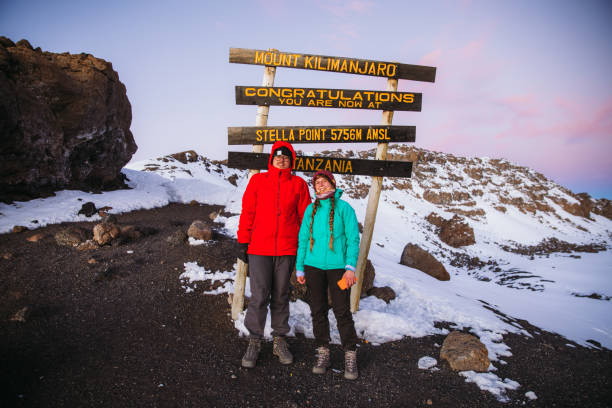
This park protects Mount Kilimanjaro, Africa’s highest mountain at 5,895 meters. Visitors come for guided summit climbs, mountain scenery, and ecological zones ranging from montane forest to alpine landscapes in Tanzania.

3. Tarangire National Park
Tarangire National Park in Tanzania is popular for having massive elephant herds, baobab trees and the Tarangire River, which attracts wildlife during the dry season. It combines well with Lake Manyara and Ngorongoro on a northern Tanzania safari circuit.
4. Lake Manyara National Park
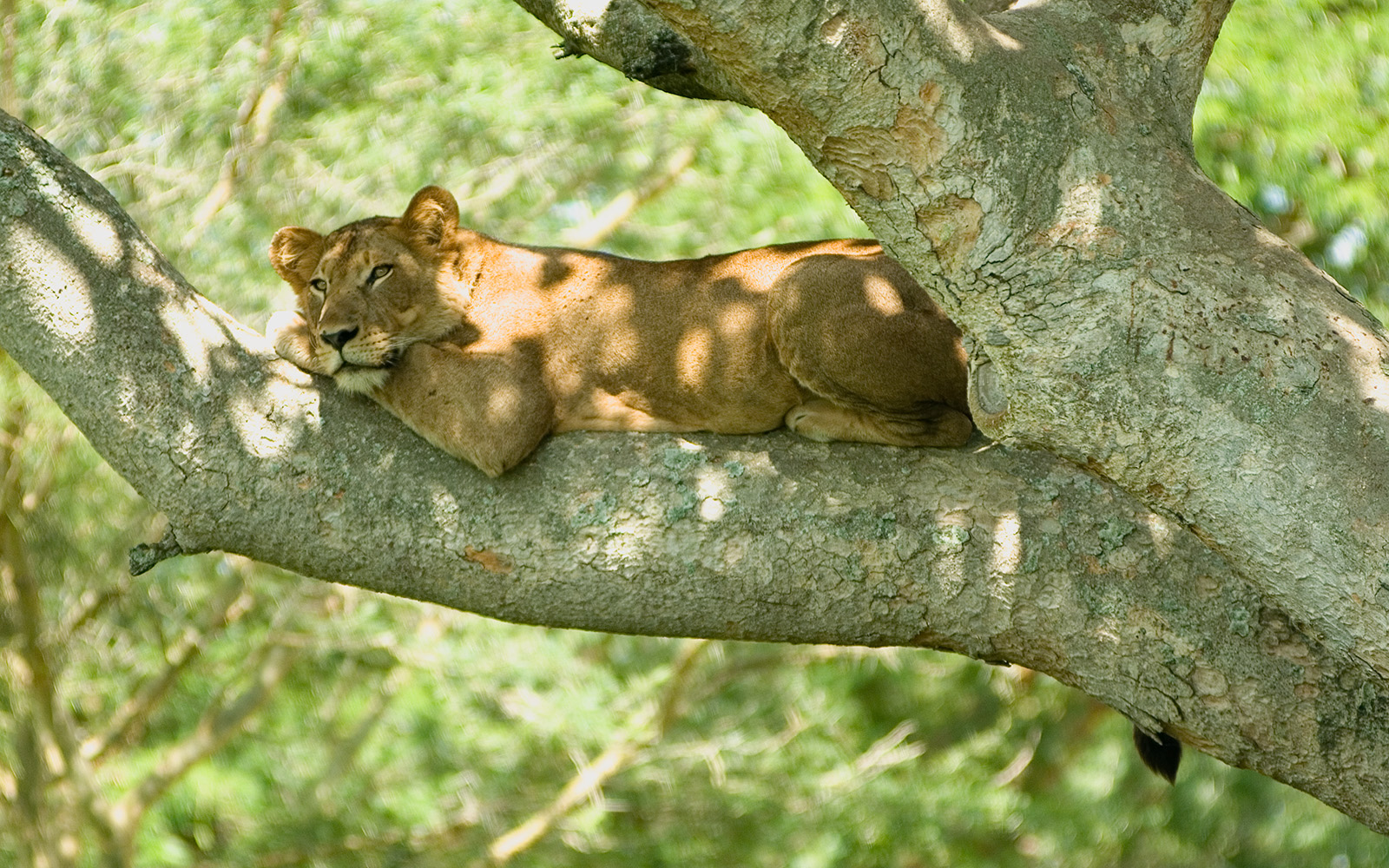
Also located in northern Tanzania, Lake Manyara National Park combines groundwater forest, woodland, open areas, and lake habitats. Lake Manyara has abundant birdlife, elephants, and occasional sightings of tree-climbing lions. Conditions and seasonal water levels influence wildlife viewing in this Tanzanian park.
5. Arusha National Park, Tanzania
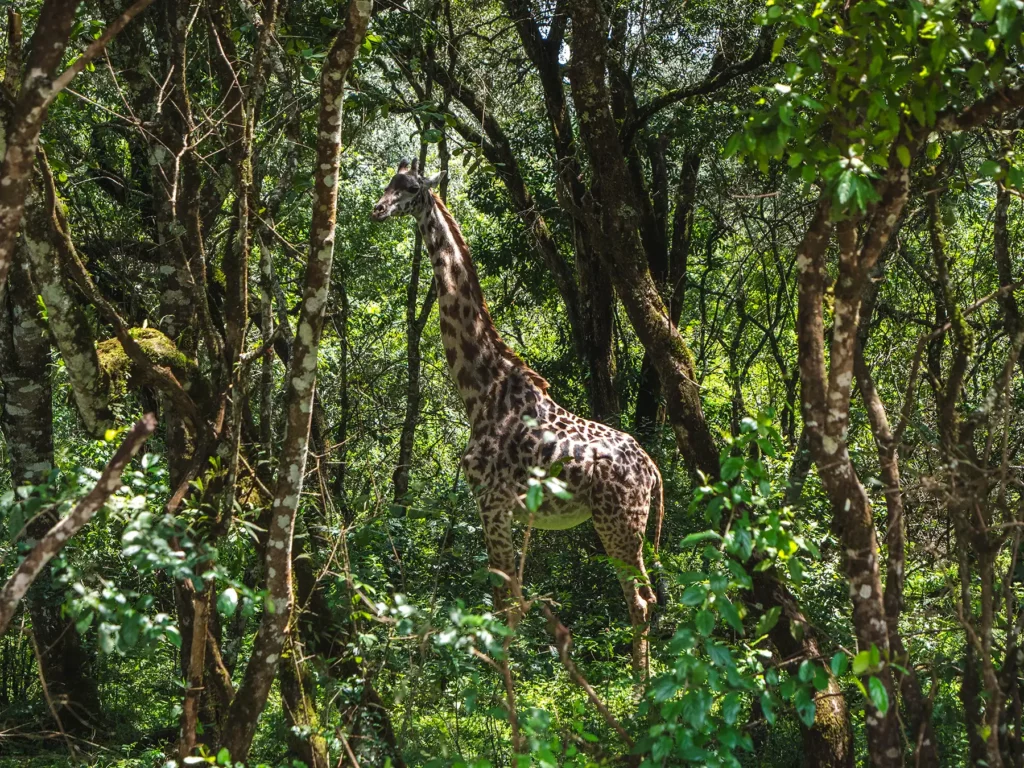
Arusha National Park features top tourist attractions in Tanzania, including Mount Meru, the Momella Lakes and varied forest and grassland habitats. It is well suited to day trips, birdwatching, guided walking activities and mountain trekking.
Western Circuit Tanzania National Parks
6. Katavi National Park
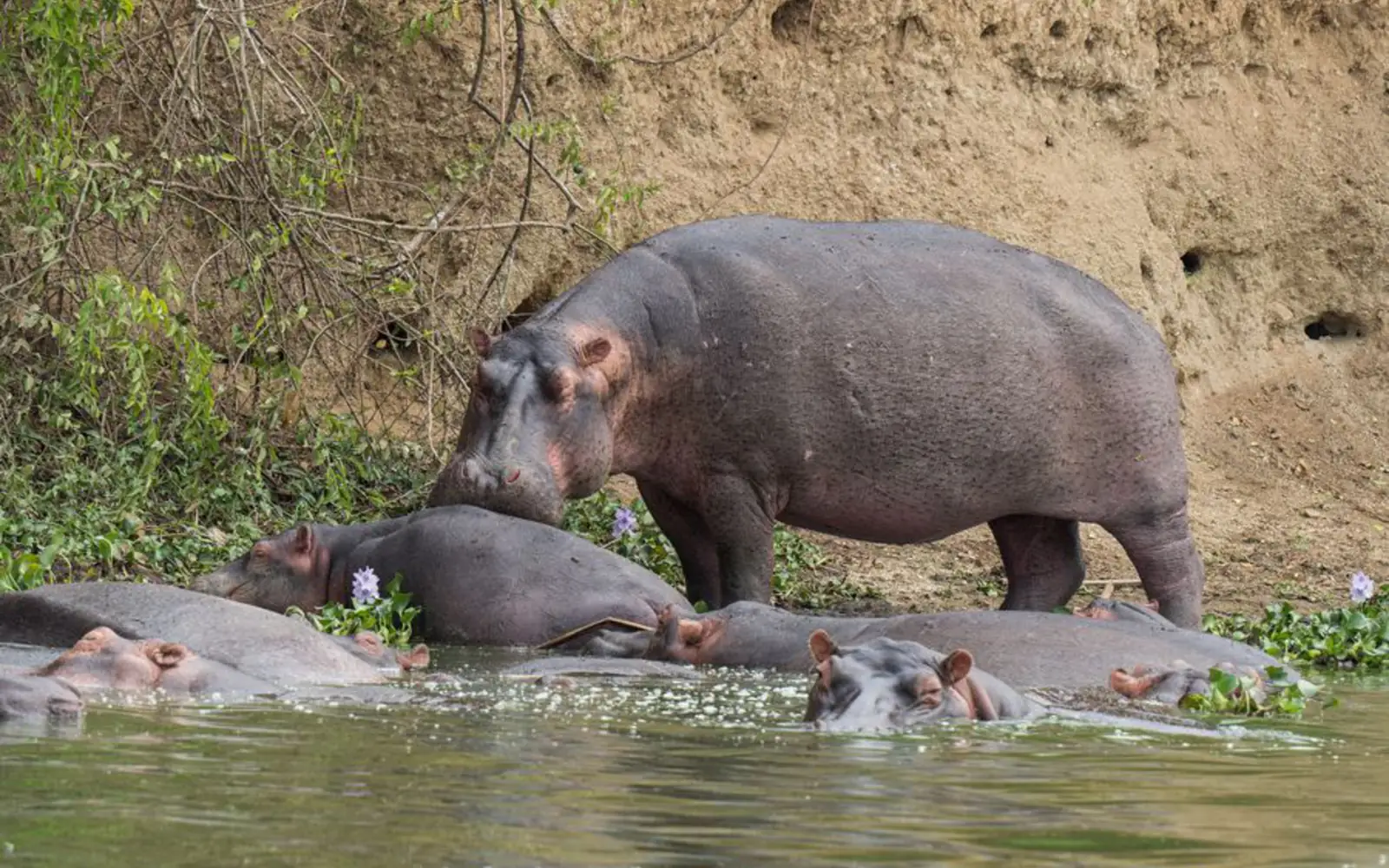
A remote wilderness national park in Western Tanzania with floodplains, seasonal lakes, and woodland. Additionally, Katavi National Park has seasonal concentrations of hippos, crocodiles, and large mammals make it attractive to experienced safari travellers in Tanzania seeking a less-visited destination.
7. Gombe Stream National Park
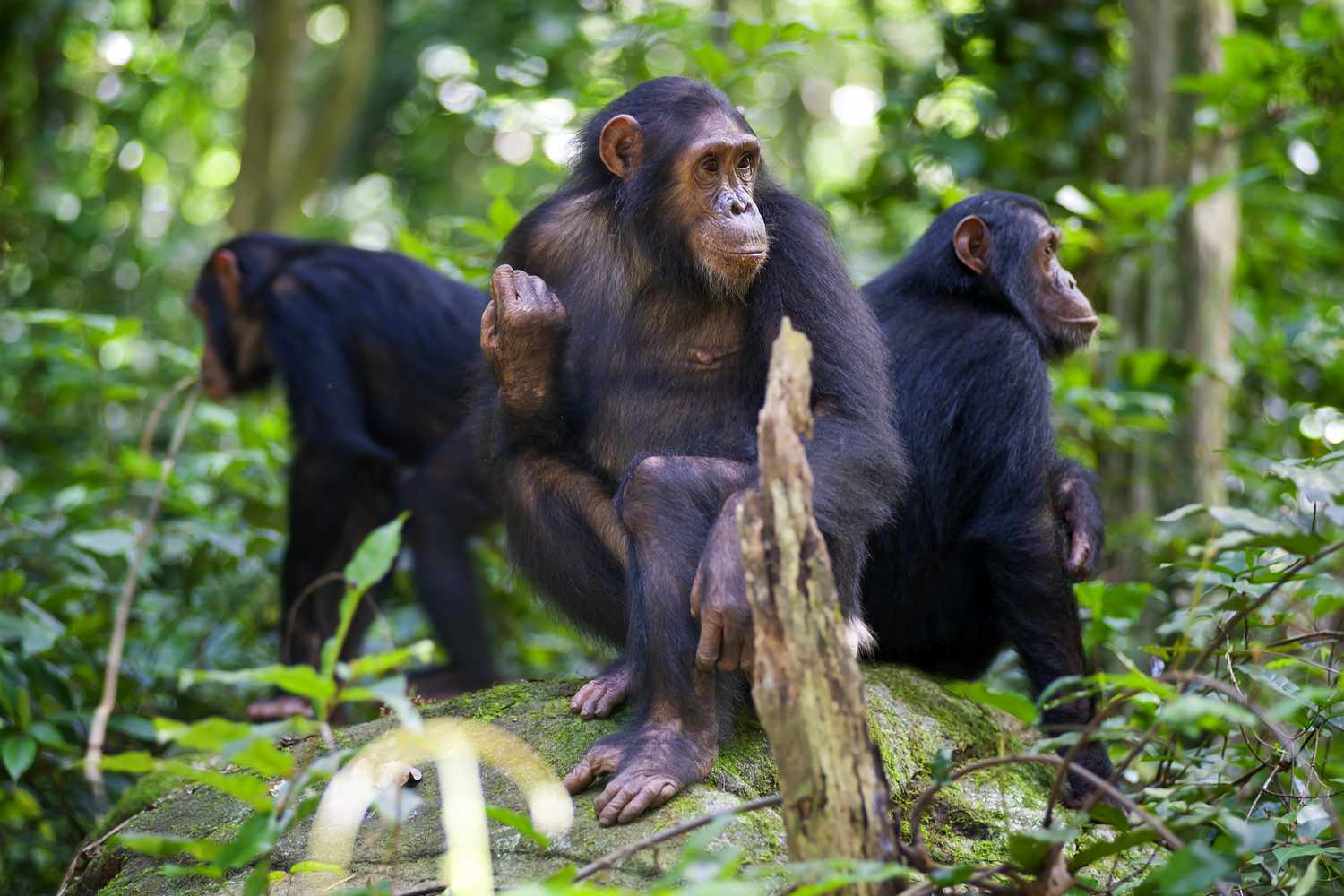
Gombe Stream National Park is famous for Jane Goodall’s chimpanzee research. Guided forest treks offer opportunities to observe chimpanzees and other primates in Tanzania in a steep, forested landscape beside Lake Tanganyika.
8. Mahale Mountains National Park
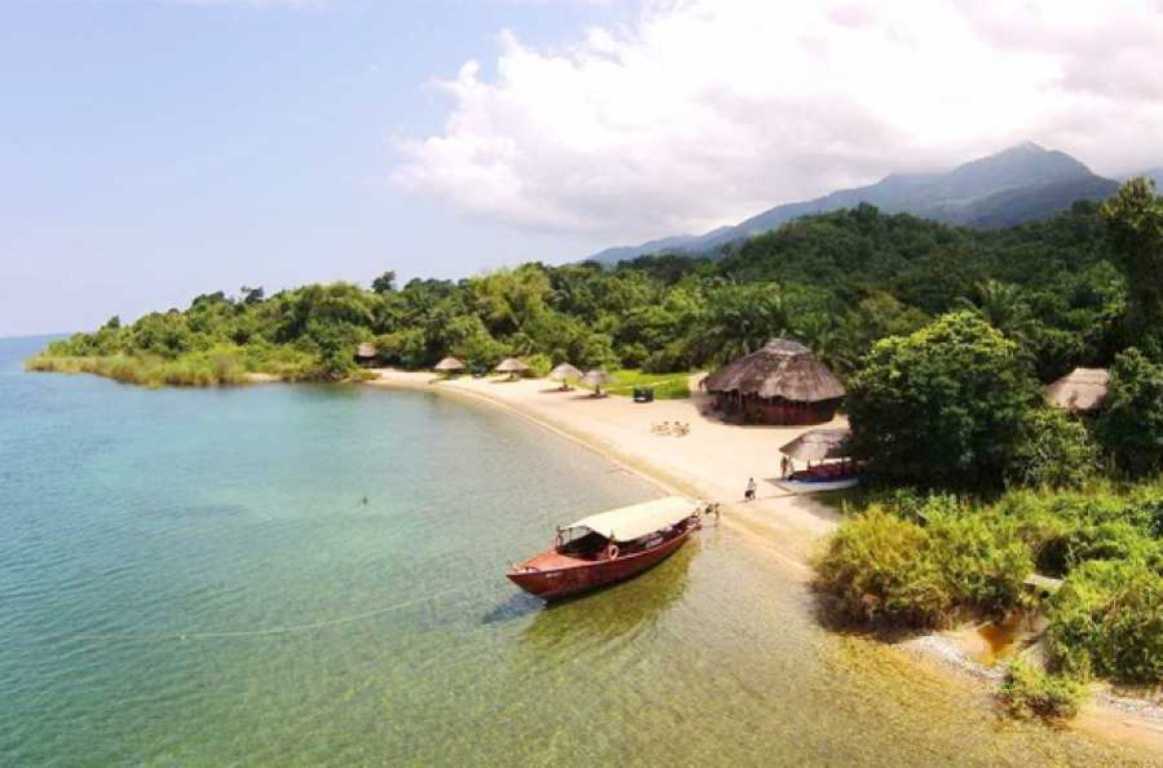
Mahale Mountains National Park protects forested mountains beside Lake Tanganyika and is known for wild chimpanzee trekking in Tanzania. Reaching Mahale National Park requires advance transport planning, and chimp trekking is conducted on foot with authorised guides.
Southern Circuit National Parks in Tanzania
9. Nyerere National Park (Formerly Serous)
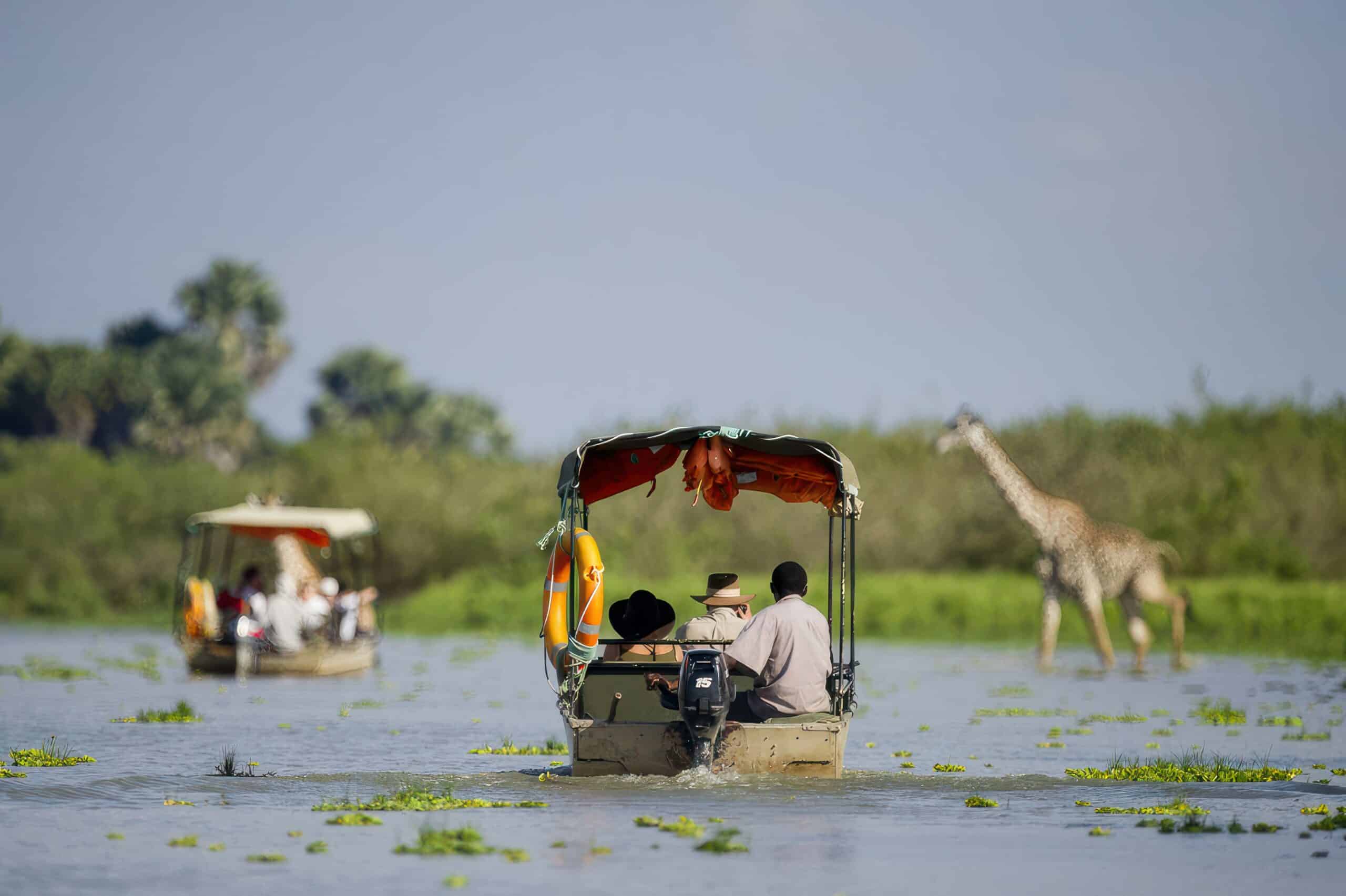
Nyerere National Park in Tanzania is popular for its extensive wilderness, Rufiji River boat safaris, elephants, hippos and predators. Additionally, Nyerere offers a different safari style from the northern circuit Tanzania National Parks, with river-based activities available in suitable areas.
10. Ruaha National Park - Tanzania's second largest national park
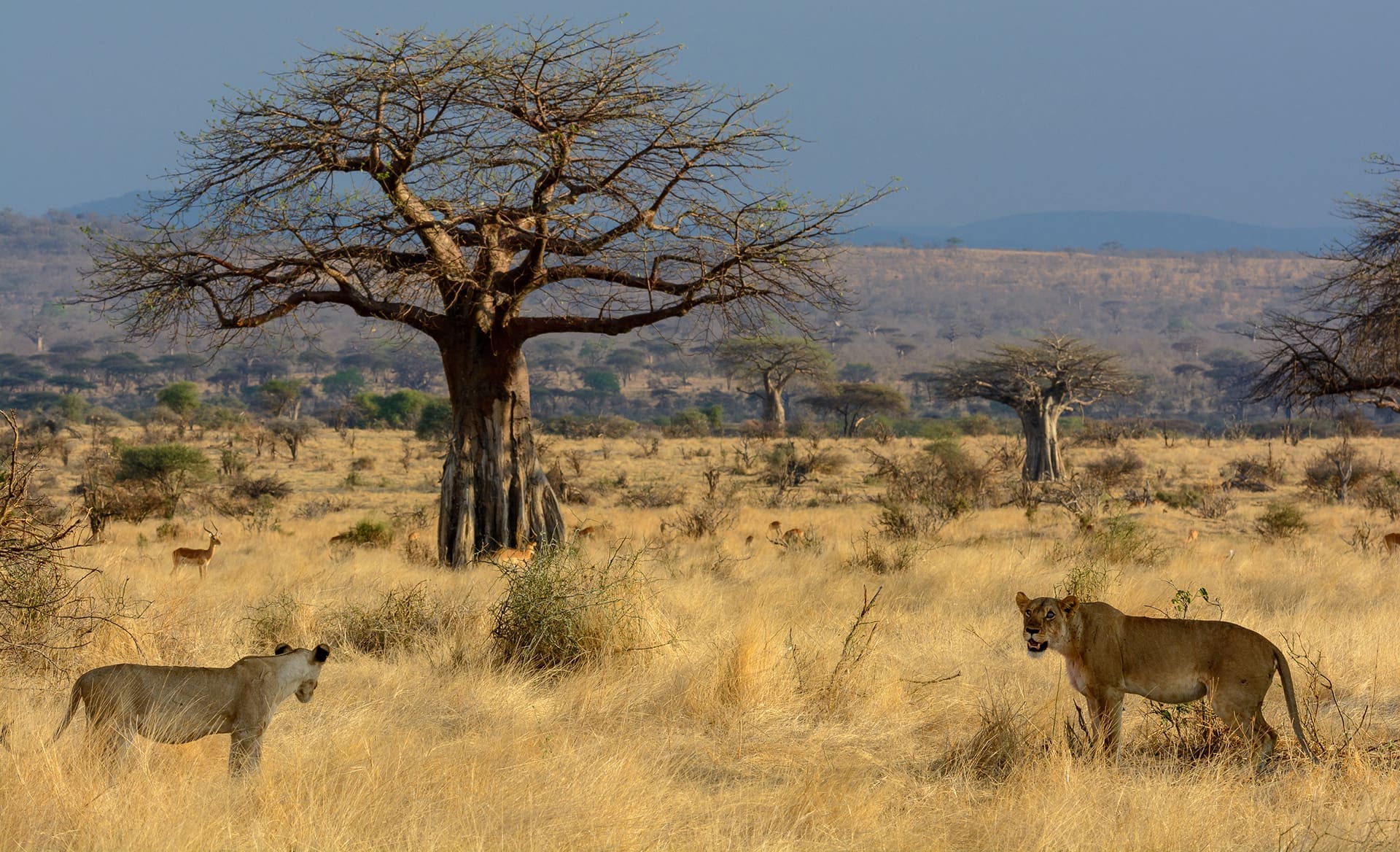
Ruaha National Park is a large, remote wildlife park covering 20,226 square kilometers and second largest Tanzania park known for elephants, lions, baobabs and a mixture of savannah and woodland. Secondly, Ruaha suits travellers who want extended game drives and fewer safari vehicles in many areas.
11. Mikumi National Park
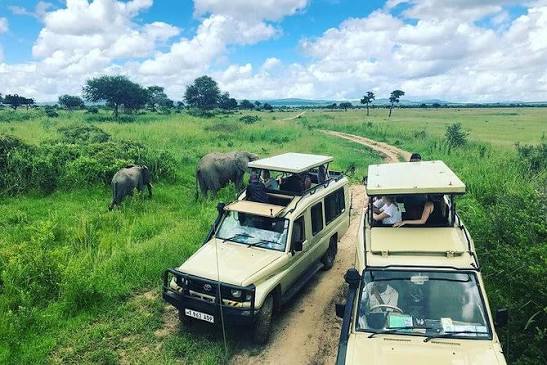
Mikumi National Park offers open grasslands, elephants, giraffes, zebras, buffalo and predators. The road access to this park from Dar es Salaam makes it a practical choice for shorter southern and eastern Tanzania safari itineraries.
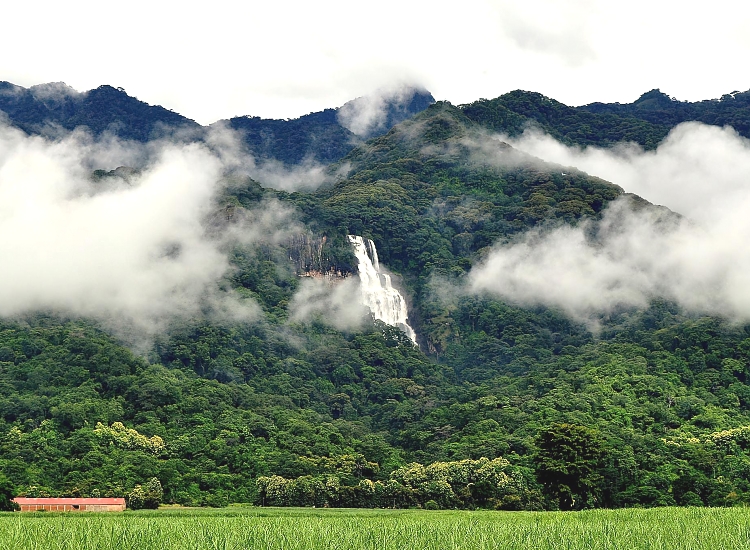
12. Udzungwa Mountains National Park
Udzungwa Mountains National Park is a forest and mountain destination in Tanzania valued for hiking, Sanje Waterfalls and endemic primates. It is particularly suitable for travellers who want a walking-based experience rather than conventional vehicle safaris in Tanzania.
Eastern / Coastal Circuit Tanzania Parks
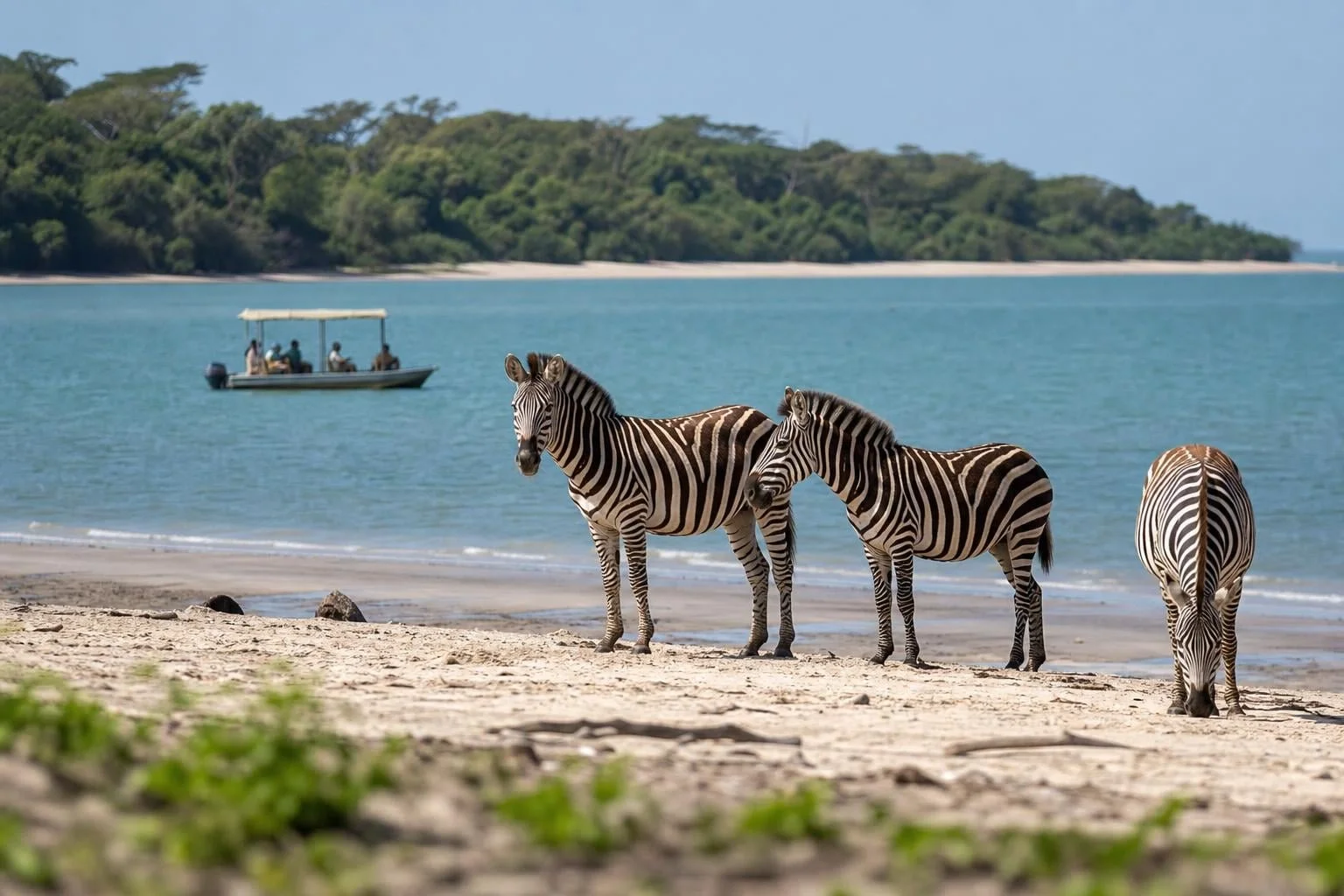
13. Saadani National Park
Saadani National Park combines coastal habitats with bush and wildlife areas in Tanzania. Its location near the Indian Ocean makes it different from inland savannah parks, although Saadani wildlife sightings and available activities depend on local conditions.
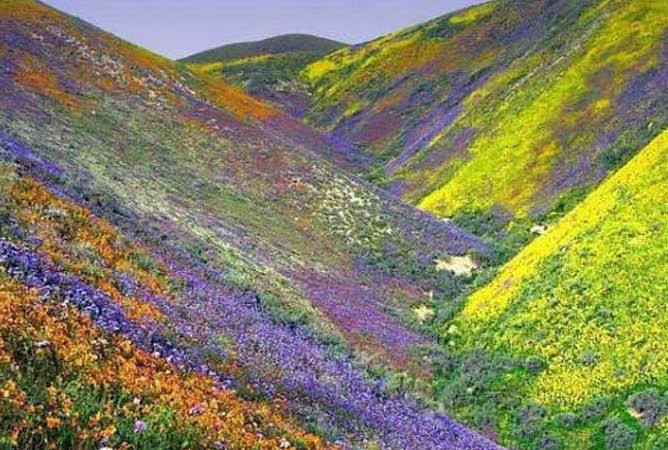
14. Kitulo National Park
Kitulo National Park also called the Serengeti of flowers has montane grasslands, seasonal wildflowers and botanical diversity. This Tanzania park is a strong choice for nature lovers and hikers, especially when flowering conditions are favorable.
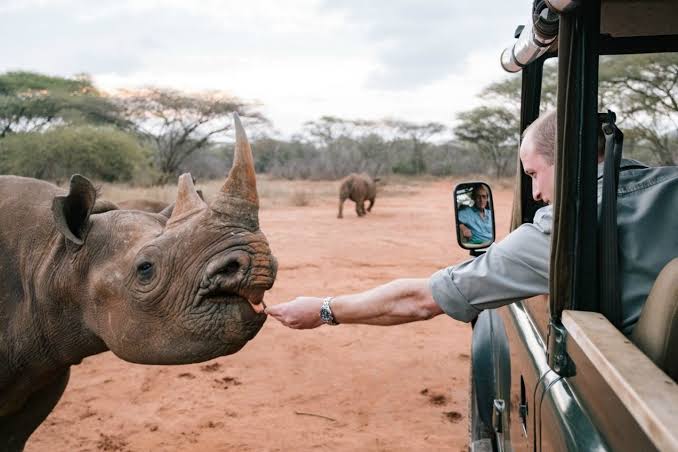
15. Mkomazi National Park
This park is a dry landscape of hills and savannah with conservation importance for endangered black rhinos and African wild dogs. Mkomazi National Park suits travellers exploring the northeastern region near the Usambara Mountains and mount Kilimanjaro in Tanzania.
What Other Popular National Parks Can You Visit in Tanzania?
16. Rubondo Island National Park
Protects an island ecosystem with forest, lake habitats and introduced wildlife, including chimpanzees. Rubondo Island National Park is an option for travellers interested in island nature and a different side of Tanzania.
17. Burigi-Chato National Park
Protects a mix of open landscapes, woodland, wetlands and lake environments. Also, Burigi-Chato is an alternative for travellers exploring Tanzania’s less-visited northwestern protected areas.
18. Ibanda-Kyerwa National Park
A protected landscape in the Kagera region near the Uganda and Rwanda borders. Visitors to Ibanda-Kyerwa National Park in Tanzania should confirm transport, accommodation and current visitor arrangements with our Serengeti Masai Mara Experts before planning a dedicated trip.
19. Rumanyika-Karagwe National Park
A protected area in the Karagwe region with natural habitats and wildlife. Rumanyika-Karagwe National Park, Tanzania is best approached as part of a carefully researched western or northwestern Tanzania trip rather than assumed to be a standard northern-circuit stop.
20. Saanane Island National Park
Saanane is an island park that offers a compact nature outing, wildlife viewing and lake scenery. The location of this Tanzania National Park makes it suitable for visitors already in Mwanza.
21. Ugalla River National Park
Ugalla River National Park is a remote protected landscape of river systems and woodland. Its limited accessibility makes advance confirmation of transport and visitor facilities particularly important.
22. Kigosi National Park
A large protected area associated with wetlands, rivers, woodland and important wildlife habitats. Kigosi National Park in Tanzania is better suited to specialist nature travel than to a short, conventional northern-circuit safari.

Top 10 Largest Tanzania National Parks by Area
The following table highlights several major top 10 biggest Tanzania safari parks with their respective sizes in square kilometers, from Nyerere which is the biggest park, to Gombe Stream, which is the 10th largest.
| Rank | National Park | Size (km²) |
|---|---|---|
| 1 | Nyerere National Park | 30,893 |
| 2 | Ruaha National Park | 19,822 – 20,300 |
| 3 | Serengeti National Park | 14,763 |
| 4 | Kigosi National Park | 7,460 |
| 5 | Burigi-Chato National Park | 4,707 |
| 6 | Katavi National Park | 4,471 |
| 7 | Ugalla River National Park | 3,865 |
| 8 | Mkomazi National Park | 3,245 |
| 9 | Mikumi National Park | 3,230 |
| 10 | Tarangire National Park | 2,850 |
Sizes are based mainly on official TANAPA / Ministry of Natural Resources and Tourism figures. Ruaha is sometimes listed between about 19,822 and 20,300 km² depending on the source and boundary updates. Also, Ngorongoro Conservation Area is not necessarily regarded as a Tanzania park.
Tanzania National Parks: Best Parks for a Safari
Best National Parks in Tanzania for Different Safari Experiences
| Tanzania Safari Experience | Recommended Tanzania National Parks to visit | Why |
|---|---|---|
| Great Wildebeest Migration | Serengeti | Seasonal herds, predator interactions and river crossings |
| Big Five wildlife viewing | Serengeti and Ngorongoro Conservation Area | Broad wildlife diversity; rhino sightings are not guaranteed |
| Elephants and baobabs | Tarangire | Elephant herds and distinctive dry-country scenery |
| Chimpanzee trekking in Tanzania | Mahale Mountains and Gombe | Wild chimpanzees in forest habitats |
| Mountain climbing | Kilimanjaro | Guided ascent of Africa’s highest mountain |
| Hiking and waterfalls | Udzungwa Mountains | Forest trails and Sanje Waterfalls |
| Boat safaris | Nyerere | Rufiji River scenery and water-based wildlife viewing |
| Remote wildlife photography | Ruaha and Katavi | Large landscapes and opportunities away from the busiest circuits |
| Short safari from Dar es Salaam | Mikumi | More practical road access than remote western parks |
| Birdwatching | Lake Manyara, Tarangire and Kitulo | Different wetland, woodland and montane habitats |
Best safari experiences in Tanzania National Parks depending on months
The best national parks in Tanzania to visit change with the season due to the particular safari experiences they offer, which are mainly affected by the weather. Use your travel month and main interest to narrow your choices before deciding on an itinerary for your dream Tanzania holiday experience.
- The wildebeest calving season in the Serengeti National Park is best between January and February in its Southern Plains around the Ndutu Region. Also, this is an ideal time to witness high predator activity in this Serengeti safari area.
- Tracking the herds moving around the Western Corridor in Serengeti National Park, Tanzania, and getting to understand and learn each of their behaviors would be best around June to July.
- The most ideal time for the Mara River crossings in the Northern Serengeti is from August to September, when visitors get the most dramatic action of the wildlife behavior, and this time is also ideal for the hot air balloon safaris.
- For Lake Manyara, the best time for bird watching is from June to October, and this is also the time when animals like elephants gather around this waterbody.
- Chimpanzee trekking in Tanzania’s Mahale and Gombe parks is ideal in the months from June to October since it’s the dry season. So, hikers in these Tanzania national parks can easily navigate the trekking pathways of these parks to track chimpanzees.
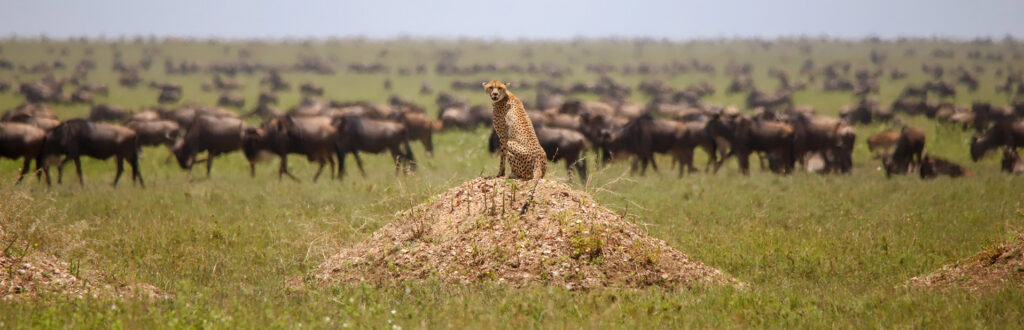
January-February: Wildebeest calving in the Serengeti
The southern Serengeti and Ndutu area are important calving grounds. Large numbers of wildebeest gather to give birth, attracting predators and providing opportunities to observe herd behavior.
March-May: Green-season landscapes
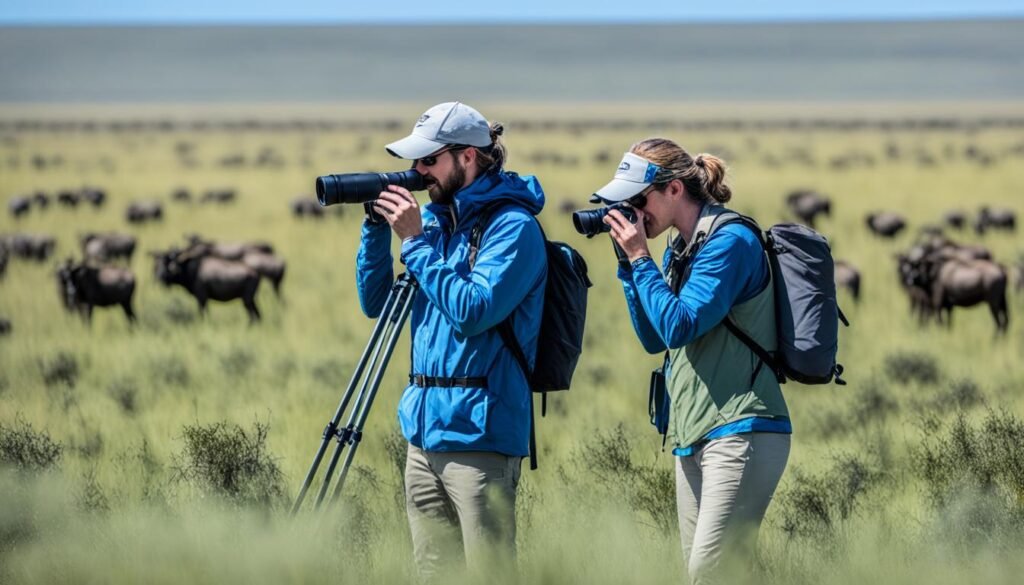
The long rains bring greener scenery and can provide rewarding birdwatching and photography safari experiences in all the national parks in Tanzania. Some unpaved roads become difficult, and seasonal accommodation availability should be checked.
June-July: Western Serengeti and migration movements
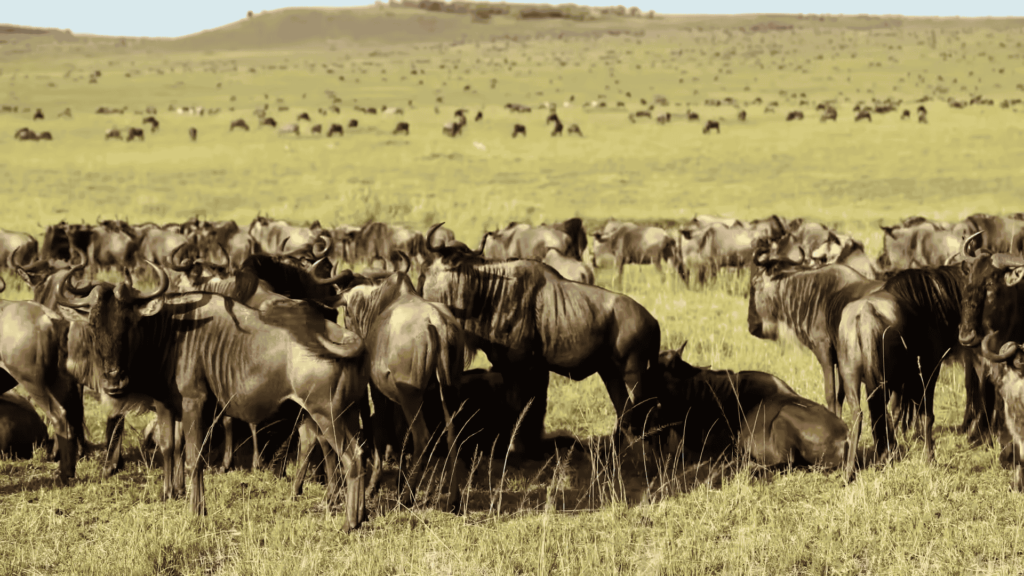
Wildebeest herds move through the Serengeti’s western corridor between June and July as they follow grazing and water. The exact timing varies with rainfall and local conditions in Tanzania and the Serengeti migration safari is the most recommended activity to do.
August-October: Northern Serengeti and possible river crossings
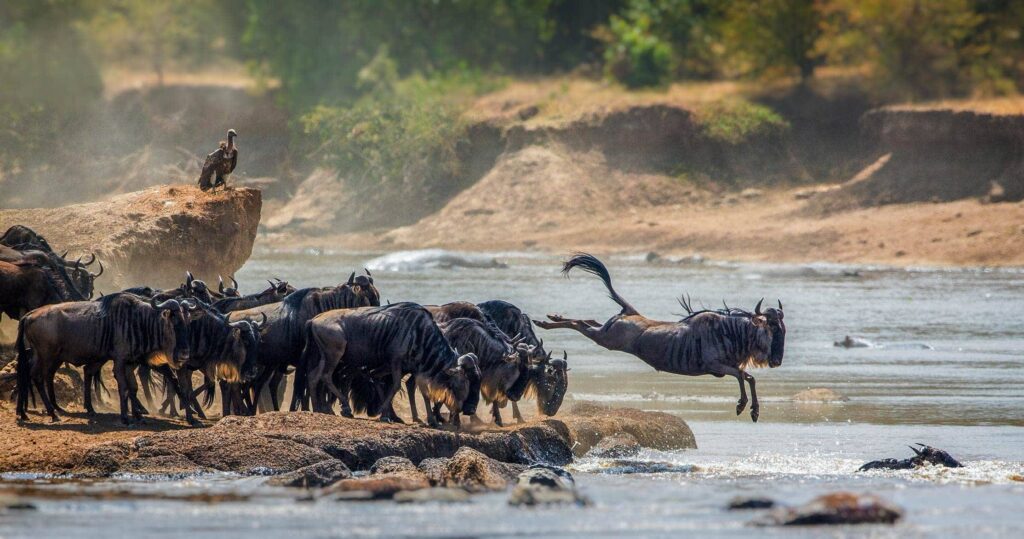
Northern Serengeti is a popular choice for travellers in Tanzania hoping to observe wildebeest crossing the Mara River. Grumeti and Mara river crossings are unpredictable and cannot be guaranteed on a particular day.
June-October: Dry-season wildlife viewing
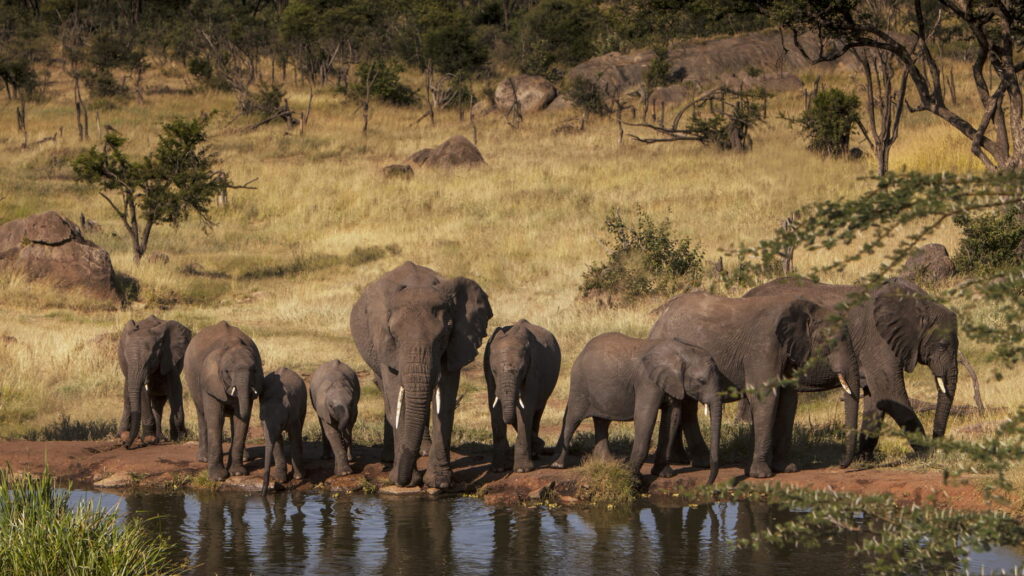
Tarangire and Ruaha National Parks in Tanzania are worth considering for elephant viewing, as animals concentrate around available water, which is usually in the Tarangire and Ruaha rivers. The dry season is also a popular period for game drives in many other Tanzania safari parks.
June-October: Chimpanzee trekking in Tanzania
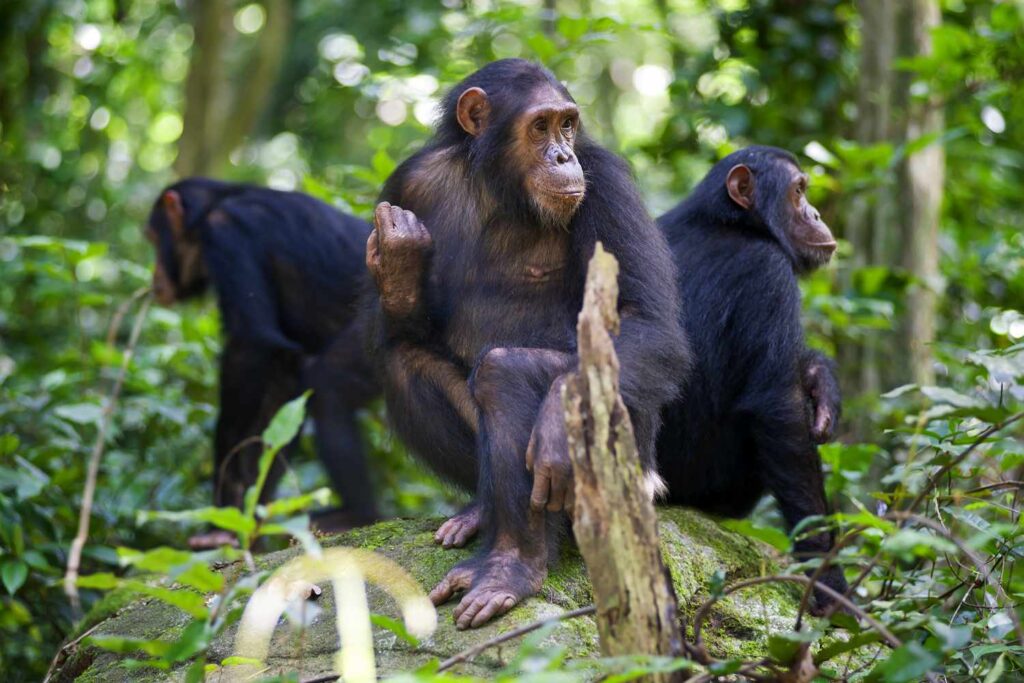
Mahale Mountains and Gombe National Park are often easier to explore and trek chimpanzees in Tanzania during the drier months, although trail conditions and access still depend on local weather.
These are seasonal planning guidelines, not fixed wildlife schedules. Serengeti Masai Mara Experts can help travelers choose a Tanzania park according to their dates and the experience they want at a perfect time.
Which Tanzania National Parks Are Best for a Safari?
The right park depends on what you want from the trip. The northern circuit is a practical starting point for many first-time visitors because several major wildlife destinations can be combined in one itinerary. The northern circuit is a section with the best national parks in Tanzania, which offer exclusive safari experiences, unlike the rest of the parks in the country. Southern and western Tanzania safari parks offer different experiences but generally require more careful transport planning.
1. Serengeti National Park
This park is famous for hosting the great wildebeest migration that happens normally from July to October. Also, the Serengeti covers about 14,763 m² and became a UNESCO World Heritage Site in 1951. Next, the best time to visit Serengeti for the calving season safari experience is usually from January to February. Also, you can follow the wildebeest herds through the western corridor, which is usually from June to July and the dramatic Mara River crossings. Lastly, this park has large concentration of big cats, especially lions and leopards, best witnessed hunting at any time of the game drive, but they are more active during the early morning and also in the late evenings.
2. Tarangire National Park.
Tarangire has a high concentration of elephant herds, but it is also famous for the ancient baobab trees with a rich lifeline of the Tarangire River. In addition, this park covers 2850 km², and it was established in 1970. Nevertheless, tourists enjoy safari activities like guided walking safaris and bird watching expeditions. However, the best time to visit Tarangire is from July to early November, as during this dry season animals normally gather along the water holes wildlife viewing is made much more easier and the accommodations for this park.
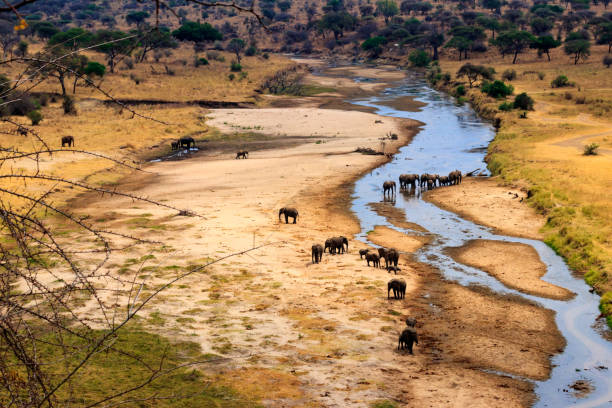
Herd of african elephants at the Tarangire river in Tarangire National Park, Tanzania. View from above
3. Ngorongoro Conservation Area.
However, much of this area is a conservation ecosystem; Ngorongoro holds the largest inactive caldera worldwide, and its area spans up to 8292 km². Birdwatching safaris in Tanzania are a common tourist activity here because the shorelines at the crater have algae that the birds feed on, and it also attracts migratory birds from other continents. The big 5 animals in Tanzania are also a major attraction in this park, but the best time to have clearer wildlife sightings is from July to October when the grass is shorter and there are no obstructions.
4. Lake Manyara National Park.
This iconic Tanzanian park is the best of the best, with shallow Lake Manyara waters famous for having tree-climbing lions and drives, which are some of the most ideal activities here. Lake Manyara Park is more compact compared to other Tanzania National Parks like the Serengeti and covers an area of about 648.7 km². Also, birdwatching safaris are a popular activity here because of this park’s large population of flamingos.
How Do Northern Tanzania National Parks Compare?
When deciding which national park in the northern Tanzania circuit to visit for a safari, we usually compare these parks with guidance from our Serengeti Masai Mara Experts, based on factors like size, accessibility, the different types of accommodations that the park offers, and the unique activities to do that the park is to offer. The best northern circuit Tanzania safari parks combination depends on the number of days available, arrival airport, travel season, and accommodation budget. The aim is to spend time exploring the best national parks in Tanzania rather than lose too much of the trip to transfers.
| Destination | Main Strength | Ideal Use in a Tanzania Safari Parks Itinerary |
|---|---|---|
| Serengeti | Migration and predator viewing | Two or more nights where time allows |
| Tarangire | Elephants and baobab scenery | One or two nights |
| Ngorongoro Conservation Area | Crater wildlife and highland scenery | A dedicated crater visit and suitable overnight stop |
| Lake Manyara | Birdlife and varied habitats | A Lake Manyara day trip or short stay |
| Arusha | Mount Meru, forest and lakes | A day trip, walking activities, or a Mount Meru trekking |
Which Southern or Western Tanzania Parks Should You Visit?
These parks lie far from the northern circuit, and each is quite different. Tell our safari experts what matters most to you, and we’ll point you to the western or southern circuit Tanzania safari park that delivers it. Mahale and Gombe National Parks are worth considering for travellers in the country whose main priority is chimpanzee trekking in Tanzania. Nyerere and Ruaha parks are stronger options for a southern wildlife safari. Mikumi National Park may suit travellers with less time, while Udzungwa Mountains National Park is a better match for hiking than for a traditional vehicle-based safari.
| Park | Why Choose It | Region | Best For |
|---|---|---|---|
| Mahale Mountains | One of Africa’s largest chimpanzee populations, reached only by boat or small aircraft | West | Chimpanzees, solitude and few crowds |
| Gombe Stream | Jane Goodall’s research site, red colobus monkeys, and 200+ bird species | West | Chimpanzees, conservation history, rare and endemic wildlife |
| Nyerere | Africa’s largest national park, with Rufiji River boat safaris and strong predator sightings | South | Predators and big game, boat safaris, solitude and few crowds |
| Ruaha | Tanzania’s largest elephant population, lions, cheetahs, leopards and wild dogs | South | Predators and big game, elephants, solitude and few crowds |
| Udzungwa Mountains | Hiking-only park with the Sanje Waterfalls and endemic primates | South | Hiking on foot, rare and endemic wildlife |
| Mikumi | Open savannah and easy road access from Dar es Salaam | South | Easy access from Dar |
National Parks for Best Safari Activities
Different Tanzania national parks suit different safari activities. Select the experience you value most, then compare the season, travel time and available facilities.
Best Parks for game viewing
Game drives are the cornerstone of our tours in Tanzania, but to give you a complete safari experience, here are the best parks for game viewing.
Serengeti National Park
The centerpiece of the northern circuit is the Serengeti that holds a massive concentration of wildlife, from grazers like zebras to predators like the Nile crocodile. Serengeti NP is also the host of the legendary Great Wildebeest Migration, made up of enormous herds of wildebeest and zebra. Therefore, they make their way through the boundless savannas in search of better conditions, hence making game viewing in this Tanzanian park a thrilling adventure.
Ruaha National Park
Rightly called one of East Africa’s best-kept game-viewing secrets and the second-largest in Tanzania, Ruaha surprises visitors with the volume and variety of its wildlife. Ruaha National Park has more than 570 bird species. Also, game viewing is at its best towards the end of the dry season, when elephants seem to wander around every corner and animals gather at the waterholes.
Tarangire National Park
Tarangire preserves classic stretches of dry savannah dotted with baobabs that are an ancient kind of tree that has been there for more than a thousand years. However, it is home to enormous herds of elephants, along with a wealth of other life like buffaloes and also tree climbing lions. So, these animals are in abundance and make game viewing experiences in this park the most popular activities.
Gombe Stream and Mahale Mountains
If you prefer a low-key, remote safari experience in Tanzania, Mahale and Gombe parks are the front runners. These two parks both offer face-to-face chimpanzee trekking that few other safari parks in Tanzania cannot compete with.
Best National Parks in Tanzania for Birdwatching
Tanzania’s parks are also home to impressive birdlife, which makes the country a paradise for birdwatchers. More than 1,000 bird species have been recorded, so a pair of binoculars and a field guide can open up a whole new world.
Lake Manyara National Park
This park is the favorite among keen birders, and for good reason. You can expect to tick off hundreds of species in a single day during your safari in Lake Manyara National Park, from storks and eagles to barbets and pink flamingos.
Mikumi National Park
More than 400 bird species have been recorded here, including colourful residents such as the yellow-throated longclaw, the bateleur eagle, and the lilac-breasted roller. From November to April, they are joined by many migrant species that fly to Mikumi National Park, hence making it one of the best birding destinations in Tanzania.
Best Tanzania Parks for Hiking and Mountain Experiences
Game drives in Tanzania are popular for most safari enthusiasts, but nothing compares to the thrill of exploring on foot. With miles of well-maintained trails, hikers can enjoy natural beauty, spot wildlife, and learn about local plants and animals along the way.
- Mount Kilimanjaro National Park. Covering the peaks and slopes of Africa’s highest mountain, Kilimanjaro National Park offers dozens of hiking possibilities. On a climb, you pass through the otherworldly montane heath of the upper reaches. Park entrance is $70 per adult (high season), with a $40 concession fee for camping.
- Arusha National Park. Arusha National Park is one of the best parks in Tanzania for hiking enthusiasts, mainly thanks to Mount Meru. It is also very easy to reach, just a 45-minute drive from Arusha town.
- Udzungwa Mountains National Park. Protecting the largest range within the Eastern Arc Mountains, Udzungwa Mountains National Park lets you hike through lush forest to beautiful waterfalls and meet several endemic wildlife species along the way.
Best Time to Visit Tanzania National Parks
The best time to visit Tanzania parks depends on the wildlife activity, region and type of safaribexperience you want. June to October is generally a strong period for wildlife viewing in many northern and southern safari areas because vegetation is often thinner and animals may concentrate around reliable water sources. However, rainfall, road conditions and wildlife movements vary by location and year.
For the Mahale Mountains and Gombe National Parks, it is often preferred to go between June and October for chimpanzee trekking as the forest trails are generally drier. However, it’s still a good idea for visitors to check local conditions and transport availability before booking their Tanzania safari tours with Serengeti Masai Mara Experts for the best experience.
Tanzania National Park Entrance Fees
When planning to visit any of the national parks in Tanzania, tourists usually look at the park entry fees required to secure a permit to enter those premises. However, the fees are solely charged depends on why ether bit is the low season or the peak season.
| Tanzania National Park | High Season | Low Season |
|---|---|---|
| Serengeti and Nyerere | $70 adult / $20 children (5-15 years) | $60 adult / $20 children (5-15 years) |
| Lake Manyara, Tarangire, Arusha and Kilimanjaro | $50 adult / $15 children (5-15 years) | $45 adult / $15 children (5-15 years) |
| Mahale Mountains, Ruaha, Katavi, Gombe, Burigi-Chato, Ibanda-Kyerwa, Rumanyika-Karagwe, Saanane | $30 adult / $10 children (5-15 years) | No low-season rates yet |
| Gombe | $100 adult / $20 children (5-15 years) | No low-season rates yet |
| Mahale Mountains | $80 adult / $20 children (5-15 years) | No low-season rates yet |
Note: High season usually runs from 16 May to 14 March. Low season is usually from 15 March to 15 May.
What determines Tanzania national park fees?
The cost of entering a national park in Tanzania depends on the park, visitor category, age, applicable tariff period, and the activities included in the visit. International visitors, East African citizens, and eligible residents may pay different park entry rates. A complete safari budget should distinguish between park entrance or conservation fees in Tanzania and other charges, such as concession fees for overnight stays, camping fees, vehicle charges, special activity permits, and applicable taxes. Climbing Mount Kilimanjaro and Mount Meru, and chimpanzee trekking in Mahale and Gombe, also have their own activity-related costs.
Before booking for your Tanzania National Parks safari, check the tariff for each park and the visitor category that applies to you. Confirm whether the quoted tour price includes park fees, accommodation, meals, guide services, transport, flights, and any special Tanzania park permits. A lower advertised safari price may exclude costs that another operator has already included. Serengeti Masai Mara Experts recommends confirming the total package inclusions in writing before making a payment, especially when an itinerary covers several parks or includes internal flights.
Tanzania National Park Concession Fees
If you are just within any of the parks in Tanzania, whether a camping site or lodge, or even a hotel, there is a fee that you have to pay besides the entrance fee per day, and these are the concession fees for the different parks in Tanzania.
| National Park in Tanzania | High Season (July-September) | Low Season (October-June) |
|---|---|---|
| Serengeti and Nyerere | $60 adult / $10 child (5-15 years) | $50 adult / $10 child (5-15 years) |
| Mahale Mountains, Ruaha, Katavi, Gombe, Burigi-Chato, Ibanda-Kyerwa, Rumanyika-Karagwe, Rubondo Island and Saanane Island | $30 adult / $10 child (5-15 years) | —- |
| Mkomazi, Saadani, Mikumi, Udzungwa, Kitulo | $30 adult / $10 child (5-15 years) | —- |
| Lake Manyara, Tarangire, Arusha and Kilimanjaro | $40 adult / $10 child (5-15 years) | —– |
National Parks, Game Reserves and Conservation Areas in Tanzania: What's the Difference?
Tanzania has several types of protected areas, and the distinctions matter when planning a safari because permitted activities, management arrangements, and fees can differ. There are four different categories of wildlife areas that Tanzania depends on to conserve its wildlife. So, it is best to know the differences, as they have a contrast in their rules and regulations and in conservation fee structure.
1. Tanzania National Parks.
The main purpose of the national parks in Tanzania is wildlife conservation, which contributes highly to the tourism industry. However, these parks have very strict regulations, and most times it is limited to activities like game drives, hot air balloon safaris in Serengeti. Also, the nature walks mostly in the best national parks in Tanzania, like Lake Manyara and the Serengeti.
2. Game Reserves in Tanzania
Unlike the national parks in Tanzania, the game reserves allow recreational hunting on the same land where the wild animals are also conserved. Additionally, game reserves in Tanzania include ecosystems like the Grumeti game reserve and the Maswa reserve. However, in the 22 Tanzania safari parks, like the Serengeti, Tarangire and so on, such activities are highly prohibited.
3. Wildlife Management Areas in Tanzania.
These wildlife protection areas are managed by the local people who are responsible for the conservation of natural resources alongside the wild animals. So, this is for sustainable land use that also contributes to the benefit of the local communities in Tanzania surrounding these areas. Tanzania has 38 Wildlife management areas, each covering about 29000 square kilometers of land, and for example, the Enduiment Wildlife Management Area and the Makao Wildlife Management Area.
4. Conservation Areas in Tanzania.
Conservation areas in Tanzania are for the sustainable use of natural resources, with the surrounding local community being inclusively allowed to use these natural resources. For instance, the Ngorongoro Conservation Area is the main one, and the Maasai live inside with livestock, and the same land is used for wildlife conservation and for their cattle grazing. Hence, these people cohabit with the wildlife in this area.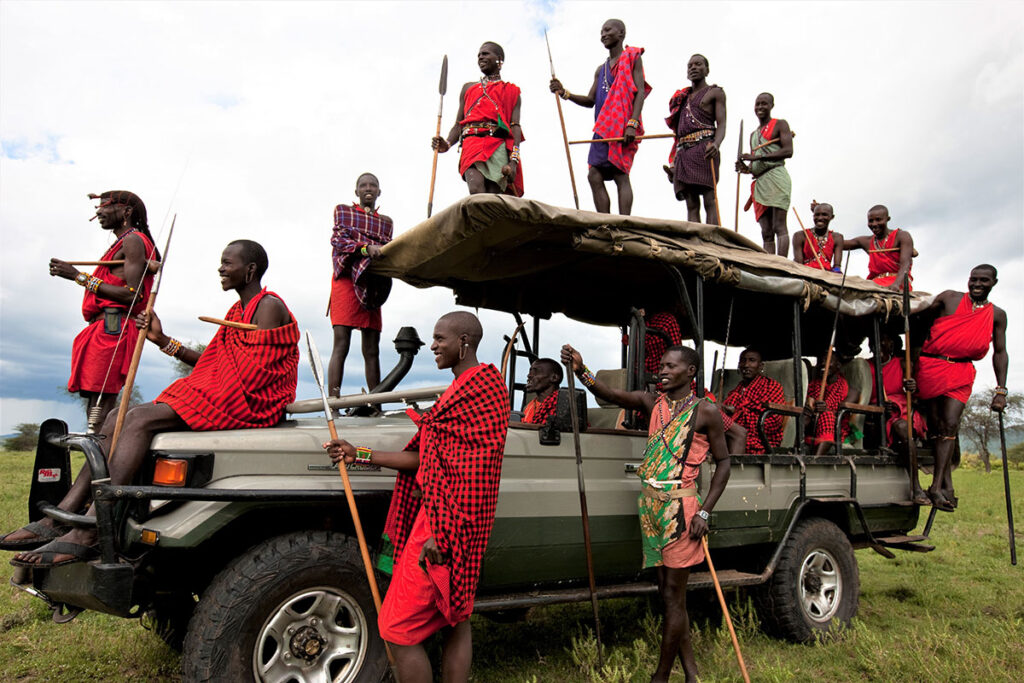
Tanzania National Park Rules and Visitor Regulations
A few simple Tanzania park rules apply to everyone who visits these wildlife locations during their safari. So, these rules exist for your safety and the well-being of the wildlife in Tanzania. All of these rules are drawn from the responsible tourism code of conduct, which every one of our guides and drivers works to uphold.
- Driving hours: Driving in the national parks is allowed only between 6 am and 6 pm, except in parks that permit night game drives.
- Speed limits: 50 km per hour in Tanzania’s national parks and 25 km per hour in the Ngorongoro Conservation Area.
- Never feed the animals: Feeding changes the diet of animals and makes them dependent on people.
- Stay on trails: Use authorized trails only during your game drives and walking safaris in Tanzania parks.
- Camping and picnics: Allowed only in designated campgrounds and picnic areas.
- Respect the animals: Do not harass or disturb wildlife in any way. Playing music while on a Tanzania safari in parks is strictly forbidden.
- No fires: Do not light fires, and if you are camping in Tanzania safari parks, put out any fire carefully.
- No drones: Drones are not allowed inside all the 22 Tanzania safari parks.
- Keep your distance: Stay at least 20 metres from animals in parks, and pull to the side of the track so other vehicles can pass.
The ecosystem of a national park depends on a delicate balance. Do your part and follow these Tanzania national park rules so that animals and their natural habitats keep thriving.
Responsible Tourism and Wildlife Conservation in Tanzania
Tanzania’s national parks serve as a safeguard for wildlife habitats and the wildebeest migration routes that crisscross the country, its forests, wetlands & mountain ecosystems. But all of this is dependent on having a workable park management system in place, protecting habitats, keeping a close eye on wildlife populations, and working closely with the communities living right next to these protected areas.
The Great Wildebeest Migration in Tanzania is a great example of why conservation efforts have got to reach way beyond the boundaries of a single park. The wildebeest and zebras move in search of grazing & water back & forth between the Serengeti-Mara ecosystem, so having open access to all these habitats and their migration routes is critical for their herds and the predators that rely on them for survival.
But other parks in the country have their own unique conservation priorities, the Mahale Mountains & Gombe parks, in particular, are protecting forest habitats, which play a vital role in the survival of the local chimpanzees, while Kilimanjaro is more focused on saving the mountain ecosystems that are being hit by the impacts of environmental change. In southern Tanzania, we have river systems and woodland & savannah habitats, all playing a crucial role in keeping elephants, predators & many other species of wildlife safe.
For visitors to the area, there are a few key ways to support responsible tourism, try to use only approved guides, make sure you’re following the Tanzania park rules, keep an eye out for and avoid disturbing wildlife, try to reduce any waste you may generate & choose a tour operator that’s got clarity on their conservation practices. And don’t forget that respectful interaction with local communities is also a priority too; try to set up cultural visits that get the right consent & make sure that local people see some real benefits.
Serengeti Masai Mara Experts, meanwhile, are keen to tell people that when it comes to wildlife sightings, these aren’t set-piece attractions, they’re just a natural part of being in the wild. Planning a safari in a way that gives wildlife space & sticks to the rules is key.
Plan Your Tanzania Safari with Serengeti Masai Mara Experts
You now know the parks, the costs, and the seasons, and the hard part is turning all that into an actual trip. Most people get stuck at the same point, usually with too many options and no obvious starting place. Here is the order the Serengeti Masai Mara Experts suggest, step by step.
1. Start with the one thing you’d hate to miss
Not a list, just one thing. Experiencing the Serengeti migration safari, trekking chimpanzees in Mahale and standing on the roof of Africa all pull you in completely different directions, and trying to fit all of them into one trip usually means doing none of them properly. Pick your must-have and let everything else fall in behind it.
2. Look at your travel dates
If work or the school calendar has already fixed them, that narrows your options, which is honestly a relief. If your dates are open, work backwards: Ndutu in January and February when the calves are being born, the north in August and September for the river crossings, or June to October if you simply want the best all-round game viewing.
3. Be realistic about how long you have
Five days is about the minimum for the Northern Circuit Tanzania Safari if you don’t want the whole trip to be a long drive interrupted by animals. Seven to ten days is when it stops feeling like a checklist. What travelers regret afterwards is rarely “we should have added another park.” It is usually the opposite.
4. Then just ask someone
This step is worth doing early rather than last. Twenty minutes with someone who knows where the herds are likely to be in your month, which lodge is worth the extra money and which isn’t, and which combination of parks will cost you a day sitting in a car, is worth more than another fortnight of reading blog posts.
5. What initiatives are underway to protect the national parks?
Many. Conservation organizations and initiatives work in Tanzania’s national parks, and visitors can contribute to conservation through programs such as wildlife monitoring and habitat restoration.
Plan Your Tanzania Safari with Serengeti Masai Mara Experts
Serengeti Masai Mara Experts help travellers compare Tanzania national parks and build itineraries around travel dates, wildlife interests and accommodation preferences. For migration trips, the choice of Serengeti region can matter more than the number of parks included. For shorter safaris, we help compare the time needed to reach a destination with the experience it offers. Travellers interested in southern Tanzania, chimpanzee trekking or mountain activities need a route that accounts for the additional logistics.
When requesting a safari quotation, share your preferred travel dates, number of travellers, available days and accommodation budget. This makes it easier to recommend a realistic route and explain what the price includes. Plan your Tanzania national parks safari with Serengeti Masai Mara Experts. Contact our team to discuss the parks that fit your trip.
Tanzania National Parks FAQs
Is accommodation available inside Tanzania's national parks?
Yes. There is a wide choice of accommodation options inside the 22 Tanzania parks, from luxury lodges to campsites.
Which are the must-visit national parks in Tanzania?
The most popular, must-visit national parks in Tanzania for a safari include the Serengeti National Park, Ngorongoro Conservation Area, Tarangire National Park, Lake Manyara National Park, and Nyerere National Park.
When is the best time to visit the 22 Tanzania national parks?
Visiting Tanzania parks depends on your interests. The dry season (June to October) is ideal for game viewing, while the wet season (November to May) is great for birdwatching and for seeing newborn animals. Use the month selector at the top of this guide for more detail.
Which is the largest national park in Tanzania?
Nyerere National Park is the largest of the 22 parks, and covers 30,893 square kilometres.
Which is the oldest national park in Tanzania?
Serengeti National Park is the oldest park in Tanzania and was established in 1951.
How many national parks does Tanzania have?
Tanzania has 22 national parks, including some of the most famous wildlife parks in the world, such as the Serengeti, Tarangire and the Ngorongoro Conservation Area.
Where can I see the Big Five in Tanzania?
Ngorongoro Crater is your best bet by a distance when it comes to seeing the big five animals in Tanzania. Many travellers see all five in a single day there. The Serengeti has all five too, though rhino sightings are rare and are best treated as a bonus rather than an expectation. In Nyerere and Ruaha parks, you will realistically see four, since rhinos aren’t a factor there.
Where can I see chimpanzees in Tanzania?
You can see chimpanzees at Mahale Mountains and Gombe Stream National Park, both on the shore of Lake Tanganyika in western Tanzania. Mahale has more chimps, and Gombe is where Jane Goodall did her work. Neither is a casual add-on, you arrive by small plane or boat, and the trekking is on foot, uphill, in a humid forest. It is worth every bit of the effort if you are up for it, and June to October is the best time to go.
How many days do I need for Tanzania's national parks?
Five days is about the least you can get away with on the Northern Circuit without it feeling like a long drive interrupted by animals. Seven to ten days is the sweet spot for three or four parks at a pace that lets you sit with a sighting. If you only have three or four days in Tanzania, don’t push for the Serengeti. Do Tarangire and Ngorongoro properly instead.