Lobo Area Serengeti | Private Northern Serengeti Safari Experience
The Northern Plains and the Lobo Area Serengeti form one of the most biologically expressive and visually powerful landscapes in East Africa. Though they sit within the same broader ecosystem, each of these areas in Serengeti National Park carries its own ecological personality. For instance, the Northern Plains stretch across wide, open Serengeti grassland basins where the horizon lies so far away that the ground seems to bend with the curvature of the earth.
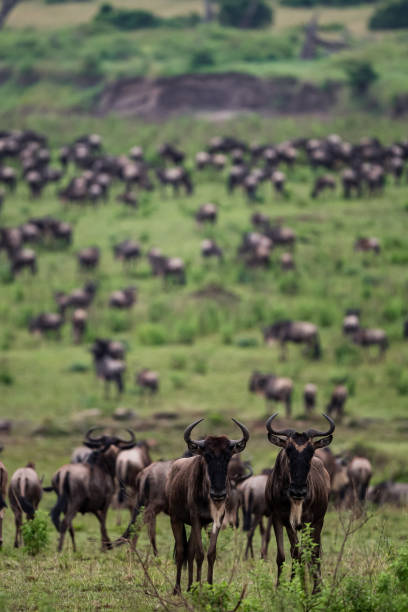
The terrain in Northern Serengeti is dominated by nutrient-rich volcanic soils, giving rise to short-grass savannas that host astonishing densities of grazing mammals. These Northern Serengeti plains support more than 35 major large-mammal species. So, this includes the migratory wildebeests in Serengeti, bat-eared foxes, and over 400 bird species. Additionally, birds in the Lobo and Northern Serengeti Area include the Kori bustards, although the actual counts fluctuate with the wet seasons and migratory movements. But the true uniqueness of the Northern Plains lies in the density ratio of grazers to predators. Also, this is among the highest in the entire Serengeti Mara ecosystem because this is where cheetahs find the space to execute high-speed hunts. Lastly, lions maintain large prides that track herds across open visibility.
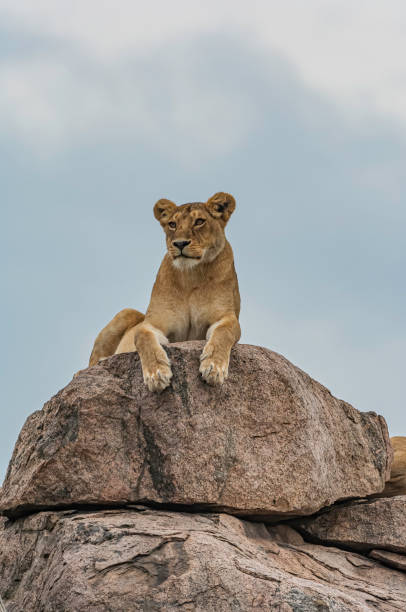
On the other hand, the Lobo area is in the northeast rise in the Serengeti National Park Tanzania. Also, this is a spectacular landscape that has unique geographical features like the ancient granite kopjes and the savanna woodland. These kopjes of the Lobo Area of Serengeti are estimated to be some of the oldest exposed granitic outcrops on the African continent. Hence, this gives the Lobo Area a rugged, ancient appeal. The Lobo ecosystem supports over 28 large mammal species, including the Lobo lions, Roan antelope, and many more.
Worst-Best time / Accessibility / Top Lobo Area Serengeti Safari Experiences / Serengeti Lodges in Lobo Area
The best and worst time to visit the Lobo Area in Serengeti and Northern Plains
The best and most ideal period to visit Serengeti’s Lobo Region and Northern plains is from mid-July to early October. Additionally, in this dry season, the weather stabilizes into clear-skied dryness. Hence, makes visibility of landscapes and wildlife spotting in Lobo Valley better, which is a photographer’s prize. At this time, moisture recedes into deep soil pockets, drawing wildlife in the Lobo Area toward predictable water channels.
Therefore, exposing animals on open ground in the Lobo Area and Northern Serengeti. Also, dry grasses fall to a uniform short height on the Northern Plains. Therefore, making it easier to observe animals in the Lobo Valley, like cheetahs, lions, and even rarely seen servals.
The worst time to visit the Lobo Area of Serengeti and the Northern Plains in Tanzania is from mid-March to late April. In addition, the peak long rains and the soils in the Northern Plains may be impenetrable during this time. So, they swell with water, creating muddy points that may hinder the movements of safari vehicles in Tanzania, especially along the Lobo East Woodland Road. Lastly, the Lobo’s woodlands become lusher during heavy rains, worsening wildlife viewing as animals hide in dense cover in the Lobo plains.
Why Choose the Lobo Area in the Northern Serengeti?
- Few safari vehicles ever make it this far north in the Lobo Area, so for miles on end its just you, your guide, the breathtaking landscape.
- The scenery in this Lobo and Northern Serengeti area stretches out in every direction with rolling hills, the granite outcrop (kopje). And occasionally jutting up out of the plains for both the wildlife to hang out, and the wildlife watchers to do the same.
- Its the resident predators that really set Lobo apart, though. You’ve got lions, leopards & cheetahs here all year round. So, they’re drawn by the reliable food on offer, and the Lobo Springs that make life here so easy. Leopards lounge in the trees along the woodland edges in Northern Serengeti. So, you can spot them in branches, whilst lions, are spotted on the top of the kopjes and cheetahs on the open grasslands. So, Lobo and the Northern Serengeti region is the perfect place for them to chase down their prey. Not something you see often, especially not in the busy bits of the Serengeti.
- By June/July though, the real magic happens & you can watch the Great Wildebeest Migration in all its glory as they make their way northwards up to the Mara River. This part of the experience is a bit different from the more famous river crossing sites – it’s generally a lot calmer, which means much less of a crowd to contend with.
- Lobo Springs is much the same with a reliable water source even in the dry season. So, makes it a magnet for all sorts of wildlife even the likes of buffalo, elephants, and loads of bird species that come to visit both resident & migratory. The woodlands around Lobo Springs are also a natural corridor for the elephants, & a real hotspot for bird-watchers.
How to Access the Lobo Area and Northern Serengeti Plains
You can access the Lobo and Northern Serengeti Areas via well-established safari routes. Get to this region by road via major access highways from Arusha to the Northern Plains via Naabi Gate. So, this route is approximately 280 km and takes up to 7 hours, depending on the number of stopovers taken. However, the road is tarmac from Arusha to Seronera junction, and then it turns into the plains. Secondly, the other access route is from Arusha to Lobo Area via the central valley (Seronera). So, the route is approximately 330km, whereby the travel time takes up to 6 hours to get to Lobo.
Alternatively, get to the Northern Plains and the Lobo Area of Serengeti by Air. So, flights provide the fastest access to the closest Serengeti airstrips like Lobo Airstrip, which is a primary access point for the Lobo Area. Also, Kogatende Airstrip gives access to both the Northern Plains and the Upper Plains Serengeti regions. Also, the Seronera Airstrip gives central access and is often used as a connection point. Lastly, the flight time from Arusha to Lobo airstrip is about 1 hour and 30 minutes.
Top Safari Experiences in the Lobo Area and Northern Serengeti
1. Predator Tracking on the Granite Kopjes of Lobo Hills
The Lobo Hills are defined by their ancient granite kopjes. Additionally, these are the unique rocky outcrops that rise from the savanna like natural skyscrapers in Serengeti. These geological formations are among the oldest exposed rocks on the continent, predating modern wildlife migrations by millions of years. The Professional Serengeti Masai Mara Experts guides help travelers often witness unforgettable scenes around these kopjes in Lobo Hills. So, they can observe the real predator-prey drama during the hunts by witnessing a lion capture and consume its kill.
2. Evening Cheetah Tracking Game Drives in the Lobo Area Serengeti
The Northern Serengeti Plains are among the most important cheetah habitats in the region. So, this is due to their astonishing visibility and short-grass terrain. Therefore, cheetahs in Northern Serengeti live in this environment. This is because they require a more open land where they can accelerate to immense speeds without risk of tripping or being visually obstructed. So, game drives to track cheetahs in the Lobo Area of Serengeti are best done in the evening.
So, this is because dawn is the prime hunting time for cheetahs, and competitors like lions and hyenas have not yet fully begun their daily patrols. This evening cheetah tracking experience is very electrifying for observers to watch since cheetahs are one of the fastest animals in the world. Usually, the cheetah chase of a gazelle can even end in seconds in the Lobo Region. Whether successful or not, these dawn pursuits show travelers one of nature’s rarest spectacles when you do your safari in the Lobo and Northern Serengeti Regions.
3. Sunset Viewing at Sero Kopje
Sero Kopje is one of the region’s most dramatic elevated formations in the Serengeti. Unlike the Lobo hills, Sero rises sharply and independently, creating a perfect natural lookout. Also, the kopje’s elevation allows travelers to observe vast distances across both grasslands and woodlands. Hence, giving Sero Kojpe an unmatched aerial perspective. This is why sunsets in the Northern Serengeti are so exceptional. Because the horizon remains clear, creating a full-spectrum view of the sky’s shifting colors
The Sunset also triggers changes in wildlife behavior and while on Sero Kopje, travelers may witness hyrax families returning to crevices. Also, owls taking their first flights of the evening, or lions are shifting from daytime rest to nocturnal activity. Lastly, birds returning to their nests, hence watching sunset from Sero Kopje, is not simply about viewing light, but it is about witnessing the entire savanna transition from day to night. So, this can be one of the unforgettable ecological moments on your safari in the Lobo area and Northern Serengeti.
4. Birdwatching Safaris at Lobo Springs in the Serengeti National Park
The Lobo Springs are among the region’s most important hydrological features. Also, they sit within shallow depressions surrounded by woodland thickets and rocky walls. The Lobo Springs create a micro-habitat distinctly different from the surrounding savanna in the Lobo Plains. Also, the Lobo springs allays remain active even during dry seasons, attracting dozens of bird species like the eagle owl, hammerkop, Kingfisher, starling, and flamingos. Even migratory birds would spring because the fact that the Lobo springs are insect-rich surroundings makes the Lobo area a critical birding hotspot.
Travelers to the Lobo Springs also enjoy observing behavioral interactions that rarely occur elsewhere. Some of which include weaver birds building delicate, hanging nests over the water. Kingfishers dive for small fish and insects that thrive in the shallow pools. So, these dynamics create a lively, layered scene whereby the observers get a feel and a sense of connection to nature.
5. Witnessing the Great Migration in the Lobo Area
Witnessing the animal migration in the Lobo area and northern plains of the Serengeti is a breathtaking spectacle. Also, this immerses travelers in the pulse of the wild while on a Lobo Area Serengeti safari. So, travelers often witness immense herds of wildebeest and zebras moving steadily across the plains, accompanied by their young. Watch these wildebeests migrate in search of fresh grazing, whereas the predators such as lions, cheetahs, and hyenas, are never far behind. So, it’s common to see dramatic hunting scenes unfold at the edge of the herds or around the few scattered waterholes and the Lobo Springs. The best time to witness these massive wildebeest movements in Lobo Serengeti is from Late June to early July because of the fresh grasslands here during this time.
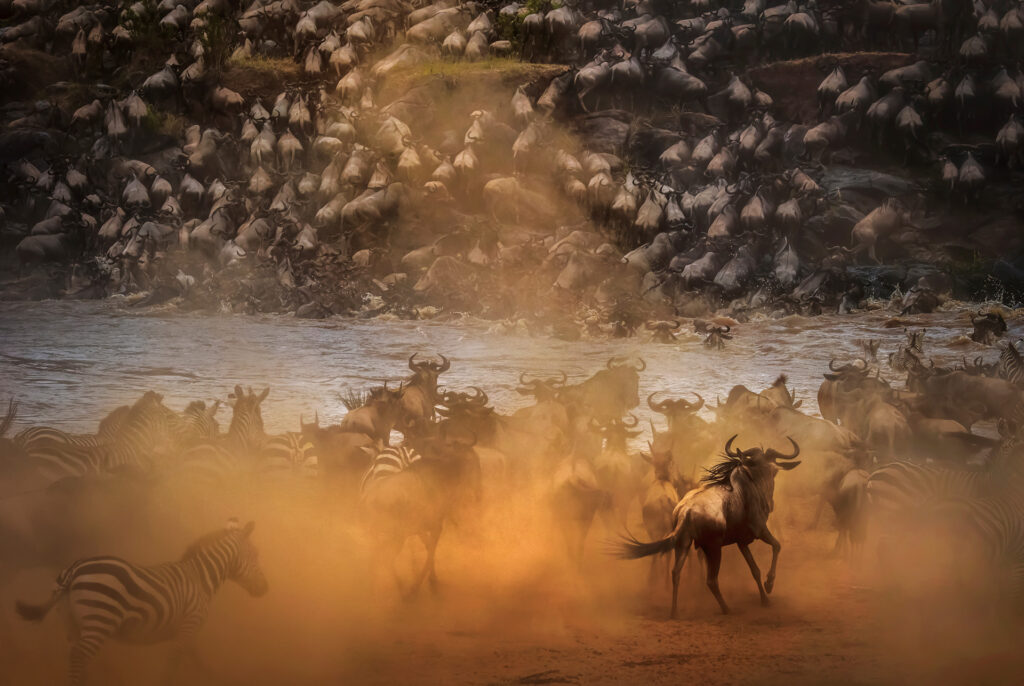
River Crossings in the Serengeti Mara region during the wildebeest migration Serengeti Tanzania
6. Elephant Corridor Observations in Lobo Woodlands.
The Lobo Woodlands Valley is a sanctuary for elephants because of the presence of permanent water sources. The latter flows through the woodlands. TheLobo Valley’s combination of shallow rivers, acacia trees, and gently rolling hills makes it ideal for social elephant behavior. Observing these Elephant herds in Lobo Serengeti offers a lesson in family dynamics. For instance, travelers observe that the matriarch leads, and as the calves stay protected by their mothers, the bulls travel on the fringes.
Hence, this is one of the remarkable adventures visitors experience just by being inside a living Lobo Area Serengeti ecosystem. So, every movement is interconnected, and the elephants’ presence sometimes determines the behavior of many other species.
Accommodation Options in and Near the Lobo Area in Serengeti Tanzania
1. Sayari Camp
Sayari Camp sits deep in the northern Serengeti migration corridor. Also, it is surrounded by acacia woodlands and open grasslands. Sayari Camp features permanent luxury tents with wooden decks, canvas roofs, and open-sided dining areas. All those create an elegant but immersive Lobo safari experience in Serengeti National Park. Prices for Sayari Camp in Serengeti are higher, typically about $500-$800 per night. Lastly, this reflects its exclusivity and prime location for river crossings during the African animal migration in the Lobo Area.
The camp is unique for its intimate setting that attracts few other tourists nearby, especially in the Lobo Valley. Hence, it allows guests to feel completely immersed in the wilderness. Services at this camp include sunrise and sunset game drives, guided bush walks, private dining experiences, and lounge areas with panoramic views.
2. Lobo Wildlife Lodge
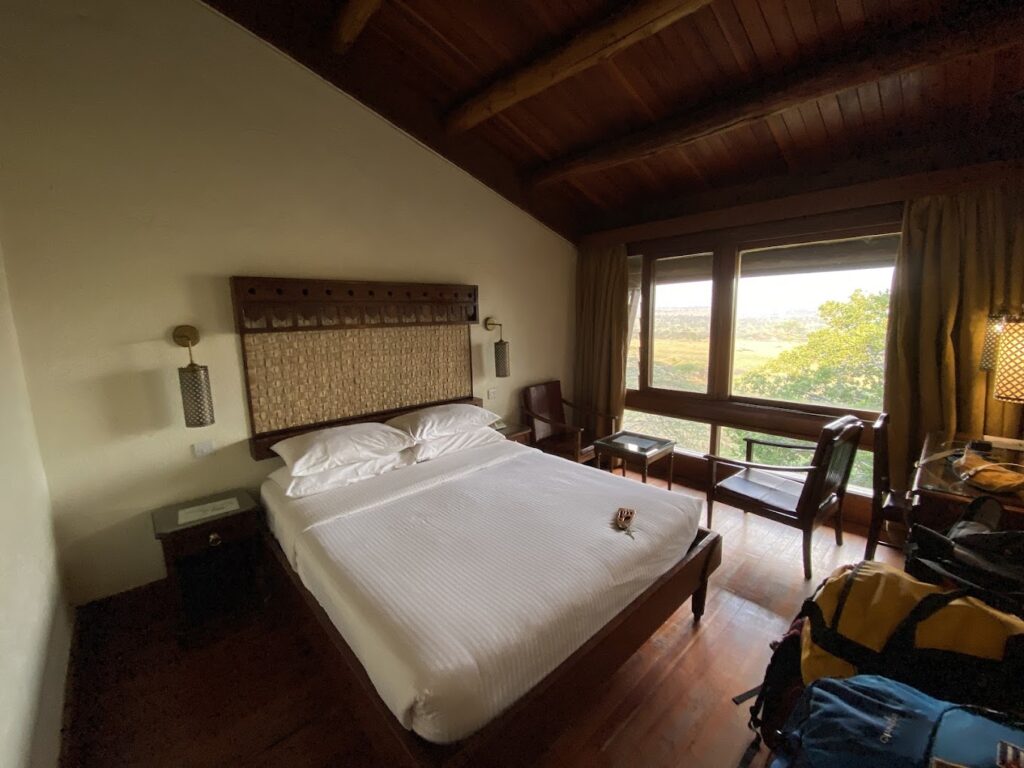
Lobo Wildlife Lodge is situated strategically on a rocky outcrop in the northern Serengeti. Additionally, it gives travelers great panoramic views of the vast plains and nearby waterholes. Its architecture blends natural stone and timber, with large glass windows that invite the savannah inside. So, this creates a seamless connection between indoor comfort and outdoor wilderness on your Lobo Safari.
Room rates at Lobo Wildlife Lodge are mid-range, typically around $200-$300 per night. However, this depends on the season, offering a balance of comfort and immersion in nature. What makes Lobo unique is its elevated position, allowing wildlife observation right from the lodge, especially during migration season. Services at this Lodge include guided game drives, bush breakfasts, a deck for sunset drinks, and a small pool. Lastly, family-friendly amenities such as laundry, Wi-Fi, and babysitting for travelers with children.
Exterior View | Lobo Wildlife Lodge
3. Klein’s Camp
Klein’s Camp occupies a remote private concession in the northern Serengeti plains. Its designs combine rustic stone walls, wooden beams, and open terraces that overlook watering holes and plains, offering a cozy yet authentic safari atmosphere. Nightly rates at Klein’s Camp range from $400-$600, depending on the number of nights one is to stay. Also, it caters to travelers seeking privacy without ultra-luxury.
The Klein’s camp in Lobo Valley is unique for its old-world safari charm, with fireplaces in lounges. And intimate dining areas that recall classic African safari camps. Guests can enjoy personalized game drives, walking safaris in Serengeti, evening fireside storytelling, and wildlife photography opportunities in a largely undisturbed setting.
4. Kenzan Mara Tented Camp
Kenzan Mara is a modest tented camp in Tanzania located near the northern plains in the Serengeti. This Camp is ideal for travelers looking for a more accessible safari experience in the Lobo plains. Its tents have wooden platforms, canvas walls, and private verandas. Hence, providing basic comfort while keeping the natural surroundings in focus.
Nightly rates at Kenzan Mara Tented camp range from $150-$250, depending on whether it is a low or peak season. Its uniqueness lies in its combination of proximity to migration routes and simplicity. So, guests at this camp can experience the raw wilderness up close without high costs while in the Lobo Area of Serengeti. Services from Kenzan Mara Tented camp include daily game drives, bush dining. Others include lounge areas for relaxation and guidance for bird-watching and photography.
NOTE: The prices for these Lobo Area and Northern Serengeti lodges/camps are estimated and vary according to season.