Serengeti Mara Safari Area | Migration, River Crossings & Wildlife
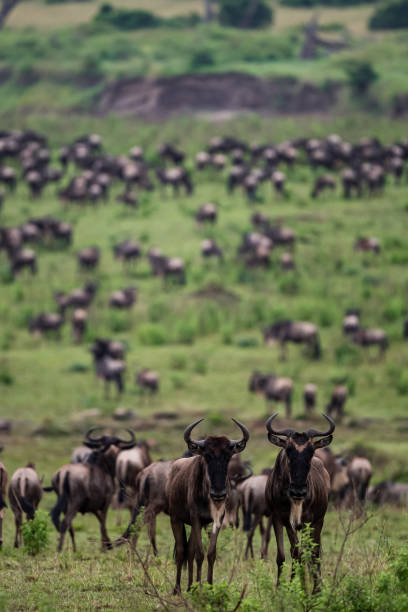
The Serengeti Mara area is one of the last remaining places to visit in Tanzania, where nature still behaves exactly as it has for millennia. Stretching across northern Tanzania into southern Kenya, the Serengeti Mara ecosystem is the beating heart of African wildlife. Also, it is a land where the skies open endlessly, where thousands of hooves carve the plains. Visit this Serengeti safari area with our Serengeti Masai Mara Experts and spot predators rule with silent finesse.
The Serengeti Mara Area is a place where raw nature still reigns, and it is unpredictable and overwhelmingly beautiful. Also, it is a destination that transforms travelers into storytellers, photographers into dreamers, and safari guides into historians. The Serengeti Mara ecosystem is shared between the Masai Mara in Kenya and Serengeti National Park in Tanzania. So, it is more than just an African safari destination, but a place where the real wilderness is truly experienced. So, travelers observe hunts, river battles, wildebeest migration in Serengeti, and calving that leave observers awe-inspired.
Worst-Best time / Accessibility / Things to do in Serengeti Mara / Lodges in the Serengeti Mara
Best and Worst Time to Visit the Serengeti Mara Area
The ideal and best time to visit the Serengeti Mara Safari area is from July to October. So, this period is regarded as the “gold standard” for the northern Serengeti and Mara region in Kenya and Tanzania. So, this is because wildebeest herds are massed along the Mara River in this season. Additionally, they prepare to cross from the golden plains of the Serengeti to the sun-kissed plains of the Maasai Mara in Kenya.
Hence, tourists in the Serengeti Mara Region are likely to witness dramatic scenes like thousands of wildebeest standing on the riverbank. And others are gathering courage to suddenly leap into the Mara and Grumeti River waters that have huge Nile crocodiles. This period is also ideal for landscape and nature photographic captures, as the plains in northern Serengeti from July to October are green and crisp. So, they offer excellent visibility of the Hills, riverine forests, and also rocky outcrops that are mainly the Kopjes.
The worst time to visit the Serengeti Mara Area is from March to May during the long rainy period. So, the roads to this area in Serengeti are muddy, slippery, and occasionally impassable. For instance, a vehicle driving from Seronera Valley to Lobo in early May gets bogged down in the muddy tracks. So, you might need assistance from another vehicle for rescue while on your trip to the Serengeti Mara Area. Also, during this period, the Serengeti can be stunningly green. However, the visibility drops because of tall grasses, making predators harder to spot. Also, weather changes like thunderstorms can also roll in suddenly, interrupting safari game drives in the Serengeti Mara.
How to Access the Serengeti Mara Area from Arusha or Nairobi
By road, your trip to Serengeti Mara starts off from Arusha in Tanzania, driving for over 350km and about 9 hours. However, this depends on which Serengeti gate you are to use for entry to Northern Serengeti in the Mara Region. Next, pass through the towns of Makuyuni and Karatu, that is, if you are using the Naabi Hill gate of Serengeti. So, drive north via Seronera, Lobo, and eventually to Kogatende near the Mara River.
People usually choose this route to get to the Serengeti Mara because of its breathtaking scenery. The latter vary from forests near Karatu, open plains at Naabi, rocky kopjes near Seronera and rolling hills near Lobo. The other option could be driving from Nairobi in Kenya to the Masai Mara National Reserve. So, the distance is over 280km, travelling for over 5 hours through towns like Narok, enjoying scenic views of the Great Rift Valley.
On the other hand, by air, you can book a scheduled flight from Arusha airport to Kogatende Airstrip in Serengeti. So, it takes over 1 hour and 30 minutes. Also, the aerial scenic perspective of Serengeti is unmatched, as you get a 360 view of all sides of Serengeti. One can also get a scheduled flight from Nairobi’s Wilson Airport to the Masai Mara Airstrips of either Ol Kiombo or Keekorok airstrip. Lastly, the flight time can take up to 1 hour, depending on which airstrip you are to land at in the Masai Mara, Kenya.
Top Experiences and Things to do in Serengeti Mara
1. Hot air balloon safari over the Serengeti Mara region.
Opting for hot air balloon safaris in Serengeti and Masai Mara is the only way to see the migration from a bird’s-eye view. This unique Serengeti Mara safari experience offers a surreal visual contrast between the Mara River, the plains of Kogatende, Lamai, and the Maasai Mara plains. So, watch animal herds forming geometric patterns on the plains, Hippos returning to the water after a night of grazing. And Giraffes casting long shadows like moving towers as rivers snake their way through the landscape during the hot air balloon safaris in Masai Mara or Serengeti.
Usually, the balloon launch site in Serengeti is at the Seronera area of Serengeti. Unlike other kinds of safari experiences in the Serengeti Mara, this is a less physically demanding one. So, it’s a way for travelers to find peace in Mother Nature, either in Serengeti or Masai Mara.
2. Big cats tracking in the Serengeti Mara.
This Serengeti Mara Safari area of Serengeti has parts like the Lamai Wedge, Kogatende, and the Lobo hills. So, these regions have a high density of big cats like the lions, leopards, and cheetahs. Travelers in Serengeti Mara spot fresh lion tracks glowing in soft morning dust, Hyenas returning to dens after their morning kill.
Also, see leopards sleeping in tree branches and cheetahs scanning the plains for their next victim. Travelers are given expert guides from the Serengeti Masai Mara who have great information about the habits and the different patterns of these big cats.
3. Witnessing the Mara River Crossing in the Serengeti Mara ecosystem.
These Mara River crossings in Serengeti usually take place around the Kogatende area, Lamai Wedge, and Mara River banks. Also, around the Mara Triangle in Kenya and the Mara River side in the Maasai Mara. This is the most dramatic wildlife event on Earth, and nothing compares to the thunder of thousands of hooves approaching the Mara River. Travelers to the Serengeti Mara Safari Area witness large wildebeest herds stretching for kilometers.
So, these form black waves across the plain while the crocodiles in the Mara River scan the water surface. Witness dust clouds rising as nervous herds push toward the Mara River bank on your safari in Serengeti Mara Region. Additionally, spot the lions watch from the shade of riverine trees, waiting for exhausted animals on the opposite bank.
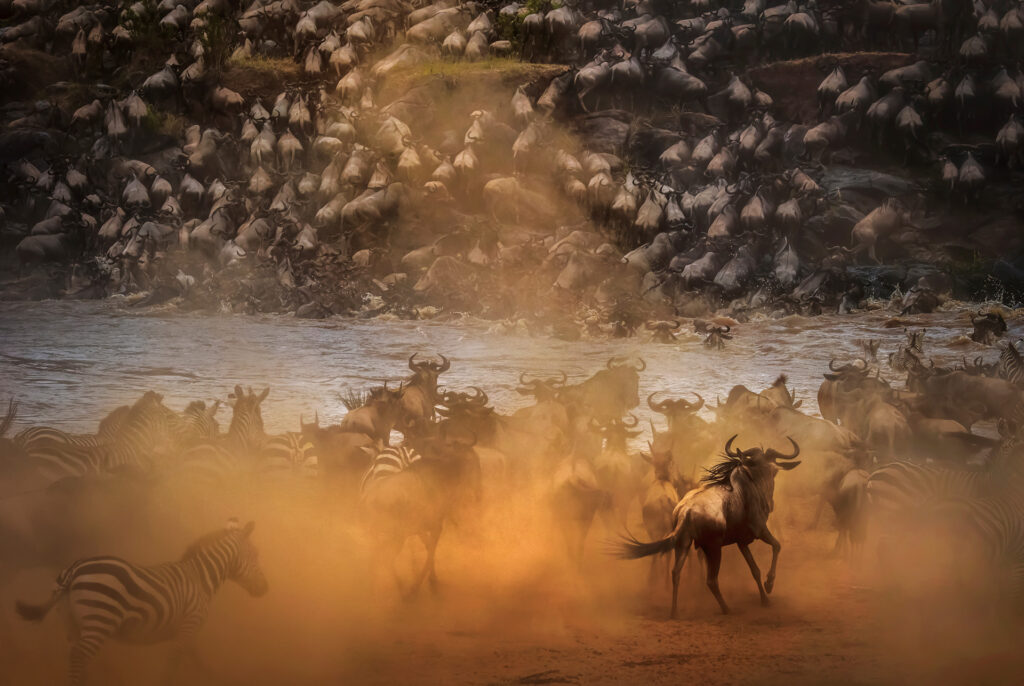
River Crossings in the Serengeti Mara region during the wildebeest migration Serengeti Tanzania
4. Guided walking safaris around the Serengeti Mara area.
Walking safaris in the Serengeti Mara safari area bring guests into direct interaction with the land. So, they smell, hear, and feel the environment at animal height. The guided walking safaris in Serengeti Mara are usually around Lobo, Bolongoja areas for Serengeti, and Naibosho in the Masai Mara. So, during the walking safaris in Serengeti and Masai Mara, travelers see tracks of hyenas, jackals, and buffalo fresh in the morning dew.
Not only do you see fauna, but you also explore the flora species like the finger grass, yellow fever trees, etc. Some of which have herbal medicinal properties. The walking safaris are part of wildlife educational programs that help travelers get to know more about the Serengeti Mara Ecosystem up close.
5. Sundowners on top of the Kopjes.
Nothing captures the soul of the Serengeti like sunset when the sky becomes a massive canvas of gold, pink, and purple. The Serengeti Mara Region is endowed with the unique granite formations called the Kopjes. Also, they’re sacred sites to the Masai people in Kenya and Tanzania. On top of the kopjes, watch in proximity, the lions lying there getting an afternoon rest. Also see the herds of elephants, giraffes, zebras, and even wildebeests walking through the gray shadows of fading light. A table is also set with lanterns, and you can enjoy an evening meal and a champagne toast here.
6. Maasai Cultural exploration in Serengeti Mara.
The Maasai people in Serengeti or Masai Mara are part of the ecosystem’s identity. So, their traditions reflect centuries of coexistence with wildlife in the Serengeti Mara Safari Area. Also, the Maasai homesteads are just a walk away from most camps around the Serengeti Mara region. During the Maasai cultural visit, a tourist sits with a Maasai elder who explains part of their history, like the meaning of cattle markings. Also, learn how warriors identify lion tracks without harming the lions, and this practice has been passed down for generations. Additionally, study how women illustrate their intricate beading necklaces while singing rhythmic harmonies.
Recommended Camps and Lodges in the Serengeti Mara
1. Mara River Tented Haven
Mara River Tented Haven is located in Kogatende, 10 minutes from the Mara River crossing points. It has raised wooden platforms which allow guests to watch herds from this Serengeti Tented camp. At a point, guests may spot a leopard drinking from the river at dawn. Lastly, the estimated prices of Mara River Tented Haven are between $850 – $1,200 per person per night.
2. Lamai Safari Lodge in Serengeti Mara
This eco-friendly lodge is strategically located on the Kogakuria Kopje overlooking endless Serengeti plains. So, Lamai Safari Lodge offers guests a front direct seat to witness the great migration in Serengeti and Masai Mara, along with other great wildlife sightings. So, you are likely to see a family of klipspringers sun themselves on the rocks outside your room. This luxury Serengeti lodge has luxurious tents, each with a private deck, where some come with infinity pools. The Lamai Safari Lodge prices are estimated to be between $900 – $1,400 according to the number of people.
3. Mara Plains Escarpment Camp.
This camp is situated near the Oloolo escarpment in the Serengeti Mara. Hence, guests here are likely to have exclusive sundowners. Also, wild species like the wildebeests are seen moving following the migration tracks through the windows of the ensuite tents that overlook the Serengeti plains. The prices of Mara Plains Escarpment Camp vary from 500$-1200$ depending on the number of nights travelers are meant to stay for their Serengeti Mara safari.